


Disclosure: When you purchase through links on our site, we may earn an affiliate commission.
If you’ve shopped for a phone on Amazon lately, you’ve probably noticed listings tagged “Renewed” or “Renewed Premium” sitting right next to the brand new models, usually at a noticeably lower price. I get asked about these labels a lot, so let me walk you through what they actually mean, because the difference between the two isn’t just marketing language. It affects the phone’s cosmetic condition, its battery health, and how long you’re covered if something goes wrong.
What “Amazon Renewed” Means
Amazon Renewed is Amazon’s own refurbished electronics program. A phone listed under this program has gone through inspection, testing, and repair by an Amazon-qualified supplier or third-party refurbisher. That process typically includes a full diagnostic test, replacement of any faulty parts, and a thorough cleaning before the device is reset to factory settings and relisted.
This isn’t the same as buying a random “used” phone from a marketplace seller. Amazon requires suppliers to meet specific quality standards before a device can carry the Renewed badge, and every purchase is backed by the Amazon Renewed Guarantee.
The Four Condition Grades
Here’s the part most buyers skip past, and it’s the part that actually matters. Amazon Renewed phones fall into one of four cosmetic condition grades:
- Premium – No signs of cosmetic damage (scratches, dents, or other wear) visible when the phone is held 12 inches away. This is as close to “looks brand new” as a refurbished phone gets.
- Excellent – Same cosmetic standard as Premium: no visible scratches or damage at 12 inches. The difference between Premium and Excellent comes down to battery health and warranty terms, which I’ll get to below.
- Good – Light scratches that are barely visible when the phone is held 12 inches away.
- Acceptable – Scratches that are visible at 12 inches and noticeable to the touch. Still fully functional, just more cosmetically worn.
Regardless of grade, every phone in the Renewed program is required to be fully functional before it’s listed. Accessories and packaging may be original manufacturer items or generic equivalents, and the listing should tell you which one you’re getting.
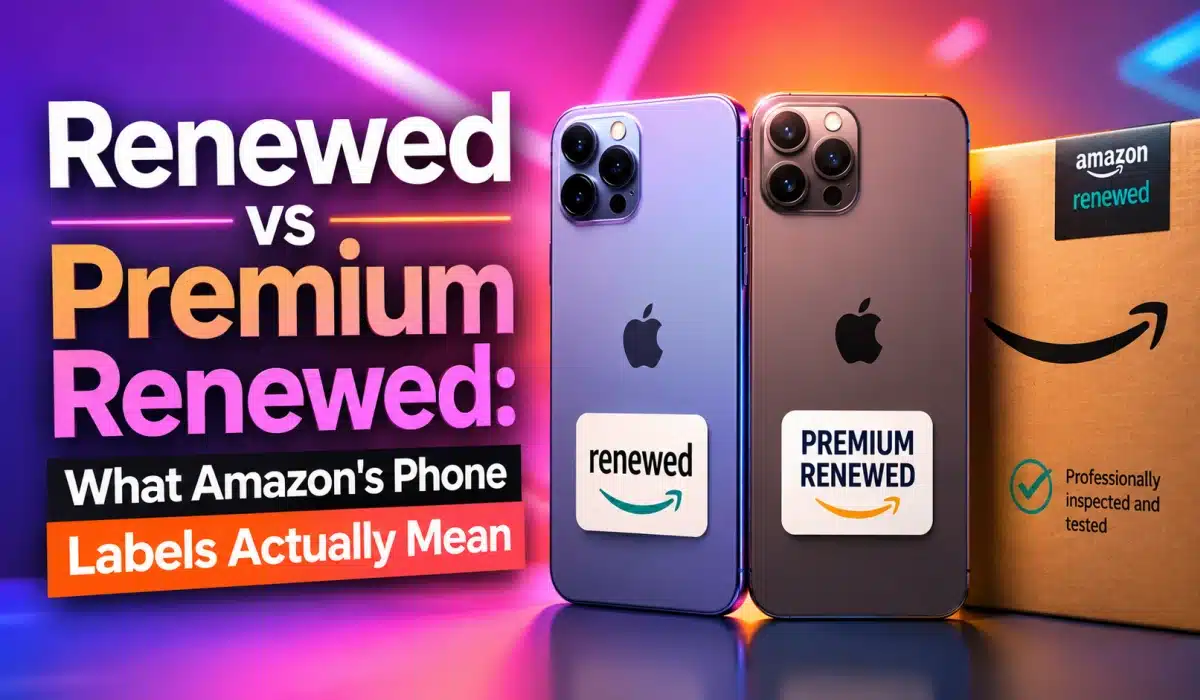
Renewed vs. Premium Renewed: What Amazon’s phone labels mean
So What Makes “Premium Renewed” Different?
“Premium” (sometimes shown as “Renewed Premium”) is the top tier of the Renewed program, and it’s a separate listing type from the regular Renewed grades you’ll see elsewhere on the page. Two things set it apart:
Battery health. Standard Renewed phones (Excellent, Good, and Acceptable) are required to have at least 80% of their original battery capacity. Premium Renewed phones carry a stricter minimum of 90% battery health. If you’re buying a phone you plan to keep for a few years, that 10-point gap matters more than it might seem.
Warranty coverage. Standard Renewed purchases come with Amazon’s 90-day return or replacement guarantee. Premium Renewed extends that significantly, often to close to a full year of coverage instead of 90 days. How that extended coverage is structured can vary by listing. On many phones it’s Amazon’s own guarantee (a return window followed by a limited warranty period), while on some Premium Renewed Samsung devices, for example, the phone is remanufactured directly by Samsung and backed by Samsung’s own one-year manufacturer warranty on top of Amazon’s return policy. Either way, the practical result is the same: significantly longer protection than the standard 90-day grades. Check the specific listing for the exact terms before you buy.
In short: Premium Renewed gets you the same near-mint cosmetic bar as Excellent, but with a healthier battery and a much longer safety net if something goes wrong down the line.
Quick Reference
GradeCosmetic ConditionMinimum Battery HealthCoveragePremiumNo visible damage at 12 inches90%Extended, up to ~1 year (structure varies by listing)ExcellentNo visible damage at 12 inches80%90 daysGoodLight, barely visible scratches at 12 inches80%90 daysAcceptableVisible scratches, noticeable to touch80%90 days
What This Means When You’re Buying a Phone
If you’re the type who keeps a phone for three or four years, the battery difference between 80% and 90% is worth paying attention to. Lithium-ion batteries degrade with use, so starting closer to full capacity buys you more time before you notice reduced screen-on time or unexpected shutdowns.
If your priority is simply saving as much money as possible on a phone you’ll use for a year or two, an Excellent or Good grade listing can be a smart buy, especially since Excellent carries the same “looks like new” cosmetic standard as Premium.
A few habits I’d recommend regardless of which grade you choose:
- Read the individual listing carefully. Sellers are required to disclose any exceptions to the standard grading, and accessory details (original vs. generic) vary by listing.
- Check who the seller is. Some Renewed listings are shipped and sold by Amazon directly, others by third-party refurbishers operating within the program’s rules.
- Test the phone as soon as it arrives. Check the battery health in Settings, run through calls, Wi-Fi, cameras, and charging, and confirm everything matches the listing before your return window closes.
- Keep your original order confirmation handy. If the phone doesn’t match its listed condition, you’re covered by the Amazon Renewed Guarantee for a refund or replacement.
Bottom Line
“Renewed” tells you a phone has been professionally inspected, tested, and restored to working condition. “Premium Renewed” tells you it’s cleared that same bar cosmetically, but with a stronger battery and a much longer warranty behind it. Neither label means “used and hope for the best.” They’re Amazon’s way of standardizing what used to be a guessing game, and once you know what each grade actually guarantees, you can pick the one that fits your budget and how long you plan to keep the phone.