


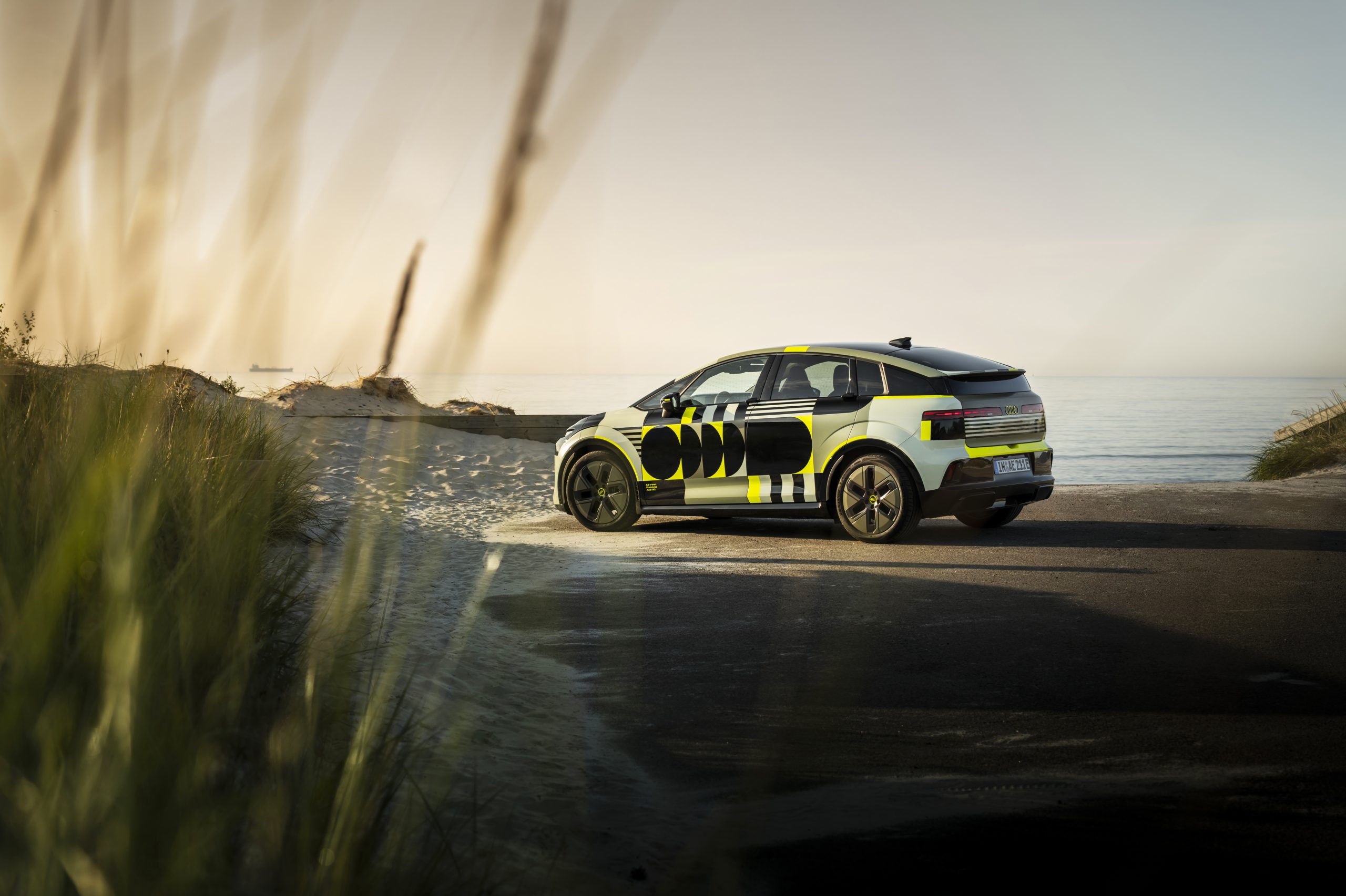
Auto giant Audi has finally confirmed select details for the upcoming A2 e-tron, which is set to make its official debut in fall 2026 and according to the company is its “most efficient vehicle” to date. Gernot Döllner, CEO of AUDI AG comments:
The Audi A2 has been a constant in my career ever since I joined the Volkswagen Group in the 1990s. Even then, its groundbreaking three-liter version made efficiency its hallmark… This is precisely the vision we are carrying forward with the new A2 e-tron: outstanding efficiency, excellent everyday usability, and a clear understanding of what customers expect from modern electric mobility.
Photo: Audi
Positioned as an entry-level compact EV, the 140-kW model is equipped with an optional efficiency package and can achieve a WLTP energy consumption of just 12.8 kWh per 100 km. A major reason for this efficiency is the car’s streamlined design, which allows for a fairly low drag coefficient of 0.24. The car is also designed with specialized aerodynamic features, including front air curtains, wheel arch gap reducers, and an active cool-air intake that opens only when thermal management requires it.
Inside, the upgraded electric drive system achieves up to a 10% improvement in efficiency. There’s a single synchronous motor that runs the show, and uses silicon carbide semiconductors to cut switching losses, thinner stator laminations to minimize iron losses, and a low-friction transmission oil paired with a high 10.2:1 gear ratio to keep motor speeds lower at highway cruise.
Power comes from a 61-kWh lithium iron phosphate (LFP) battery which according to Audi is built using a space-saving cell-to-pack design, and is optimized for long service life, thermal stability, and consistent power delivery even at lower states of charge. The company claims that its refined software and thermal management strategy yield an 89.6 percent charging efficiency with a standard wallbox.
Photo: Audi
Finally, the A2 e-tron also supports bidirectional charging, with direct Vehicle-to-Load capability that can power external electronic devices, as well as Vehicle-to-Home functionality which allows the car to act as a home energy storage system when connected to a compatible home charger.
Audi hasn’t revealed pricing details at the moment, although we’re bound to know more once it nears its launch date.