


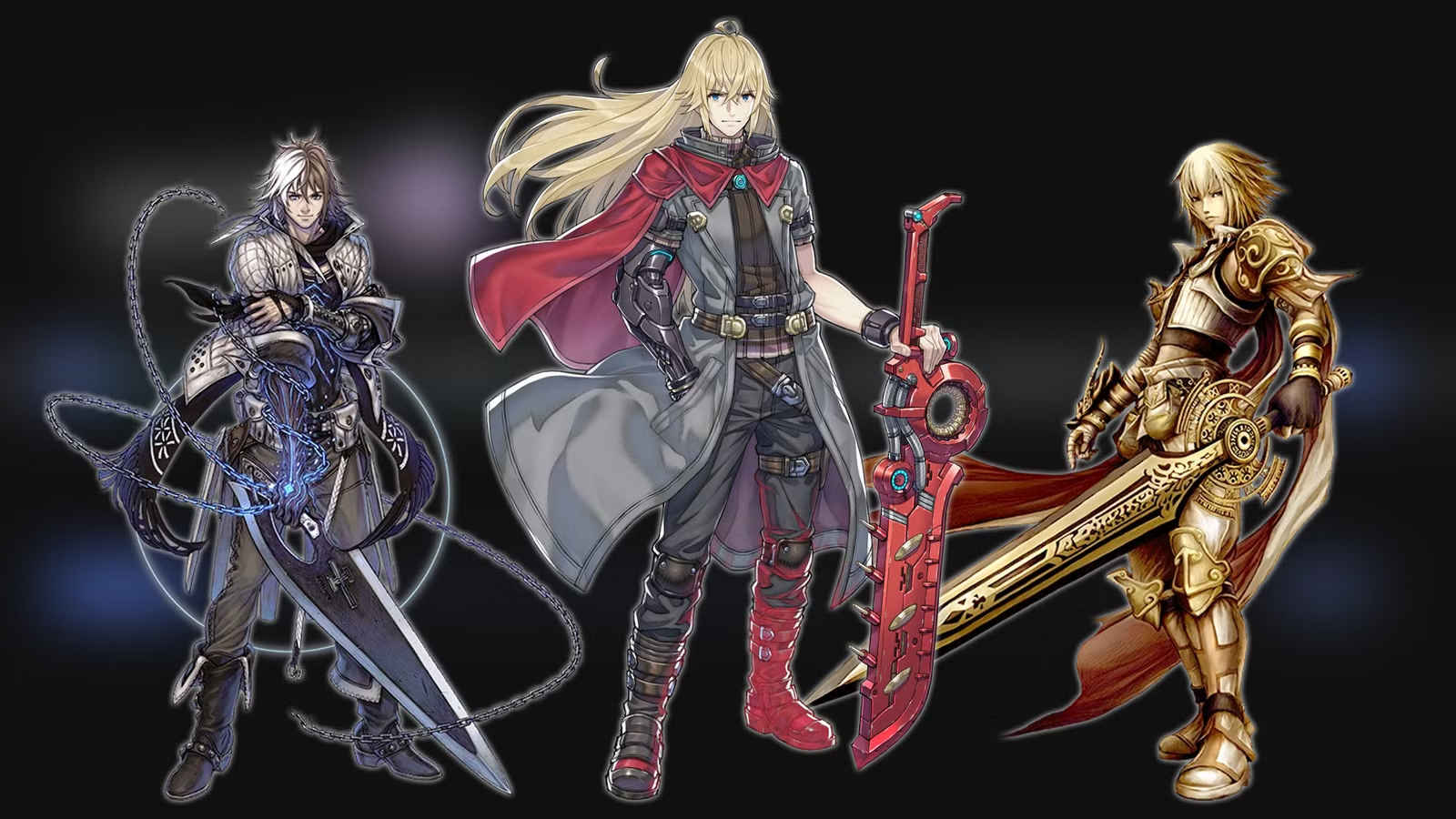
Operation Rainfall is a masterpiece in fan-driven, organized action. I think this is core gaming history that every RPG fan should know, even though I didn’t know about it myself until very recently! Look, we’ve all seen fan petitions and short-lived movements across the gaming world and beyond that never amount to anything much. They’re a dime a dozen. Oprainfall was different. With Operation Rainfall, we saw JRPG fans organize to state their case on a massive scale.
Related
10 Best JRPGs Still Stuck on Older Systems
Many JRPGs still deserve a remaster, or at least a port to modern platforms.
Even today, long after the campaign’s success, there are few fan movements in the gaming industry that feel anywhere near as successful. Many fans, especially those who aren’t traditionally JRPG players, may never have heard of Operation Rainfall at all. At this point, it’s more than a decade old, so an entire generation of gamers has come of age into a world where it’s a simple historical fact.
I’m old enough to have been around and active in the gaming community when Operation Rainfall was in full swing, and I still didn’t know about it! But its history and legacy are fantastic examples of the power of organized, collective action. Here are some of the reasons Rainfall feels like one of gaming’s biggest fan victories, years after its success.
8
The Campaign Outlived its Victory
Rainfall Became Something Lasting
The objective was simple: get Xenoblade Chronicles, The Last Story, and the criminally underrated Pandora’s Tower localized and released for North American markets. You could be forgiven for thinking that the movement would disappear after reaching all of its goals, but amazingly, it didn’t.
It just morphed into something slightly different. It still exists today as a broader community and media outlet focused on niche and Japanese games. It isn’t a dedicated and hyper-specific fan campaign hub these days. Now it’s a community-run blog and news site focused on niche Japanese games. And it still supports fan campaigns! It hasn’t done anything quite like it did with its original campaign, and to be honest, I don’t expect it to — but the fact that it still exists all these years later is a victory in itself.
7
Rainfall Changed the Conversation
From Forum Posts to Actual Lasting Success
It’s a common complaint across all kinds of communities that fan activism — or activism in general — is pointless. We’ve all seen flash-in-the-pan community petitions to save a TV series, release a game, or even to save a community space. I’ve signed a fair few petitions in my time. The thing is, a lot of them go nowhere.
Related
8 JRPGs Born from Kickstarter Campaigns
These JRPGs only exist thanks to the collective funding of a passionate community.
Except Rainfall. Here was a dedicated, organized, and vocal campaign that made the all-important transition from being a simple forum discussion to an attention-grabbing movement that struck at the heart of an entire industry. It did what many similar campaigns before and after have consistently failed to do: enter both the cultural and commercial conversations simultaneously. A decade on, it’s still a reminder that collective action works.
6
Rainfall Made Niche Demands Impossible to Ignore
It Was Impossible to Pretend No One Wanted This
Sometimes, it’s not enough to be loud and organized, even if you have a point. Sometimes, you’ve got to be relentless in your pursuit of what you want. And that’s exactly what Rainfall was. Many fan campaigns never receive any kind of official acknowledgment from their target, not even a throwaway comment.
Operation Rainfall did. Nintendo publicly responded to the demand, even though they said they had no plans for North American releases. Gaming outlets covered the campaign. Publishers acknowledged that the games had a vocal fanbase. Whatever the ultimate decision had been, Rainfall had made its demands well-known. For me, the most interesting thing about this is that Rainfall forced Nintendo to publicly choose. Or at least, created the perception of having to choose. Whether Nintendo released the games or not, Rainfall was part of the conversation. Even if the decision was made for perfectly sensible business reasons completely unrelated to Rainfall, it would have looked like a snub. Very few campaigns ever get to that point in the first place.
5
The Sheer Audacity of it All
You Don’t Get What You Don’t Ask For
Operation Rainfall wasn’t just asking for a single game to be localized. It’s one thing to go to a single publisher or developer and say, “Hey, we’d really like to play this game. We’ve got a big petition and lots of people want to preorder.” It’s another thing entirely to say that about three separate games from entirely separate franchises.
You’ve got to admire the audacity of the ask. If Rainfall had failed, we’d be looking back at it saying, “Well, maybe they should have been a bit more realistic.” They weren’t, though, and they still won. I’m terminally cautious, so definitely wouldn’t have been anywhere near as bold. There’s probably a lesson for me in there somewhere, but I likely won’t learn it! Still, the fact that they set out with such an outrageous list of demands makes their eventual success feel even bigger in hindsight.
4
The Rainfall Campaigners Were Industry Outsiders
Real Grassroots Success
The thing about Rainfall is that it wasn’t a carefully constructed industry campaign from a collection of frustrated industry insiders. It was fans with no formal authority, no major clout with media outlets or connections to industry gatekeepers. At the end of the day, they had no power, no status, and at the time, no real hope of succeeding.
Related
10 JRPGs That Shaped Modern Gaming More Than Players Realized
The release of some JRPGs had massive, rippling effects, both in the genre and outside it.
Except that they did. It would be one thing if famous industry figures had led a campaign and succeeded, since they have an in-built advantage. People are more inclined to listen to them from day one. But Rainfall was a grassroots campaign that eventually caused big companies to sit up and listen, which makes it feel much more satisfying in the long run. I look at Rainfall and see an example of real, genuine grassroots power. A legion of ordinary people worked together to achieve a common goal, and I think that’s pretty cool.
3
Xenoblade’s Success Proved Rainfall’s Point
The Fans Had a Point
In 2011, Rainfall wanted a niche Wii JRPG to get a North American release. The business case at the time was risky — if it hadn’t been considered risky, it wouldn’t have needed the campaign in the first place — but the franchise became a major Nintendo property.
Xenoblade Chronicles had around 750,000 worldwide sales at the end of the Wii lifespan, but the franchise has nearly ten million sales today. It’s got the sales, it has a dedicated fanbase generating numerous fan theories, and it’s still receiving international releases to this day. Its success makes the original victory feel that bit sweeter, since the fans were right: Xenoblade had a fanbase ready to buy. They just needed access to the game. And if, like me, you haven’t played Xenoblade Chronicles at the time, you can buy its definitive edition for the Switch and Switch 2… something I doubt would be true without Operation Rainfall.
2
Rainfall Overturned the Existing Business Case
Nintendo Had Already Said No
It’s not just that they were asking for three games to be localized instead of one. That was audacious, but entirely separate from that, the demands seemed impossible. All three games were late-stage Wii releases, when the Wii was clearly in decline. We were almost at the Wii U, so it was the very end of the Wii generation. Nintendo had publicly said it had no plans to bring the three games to America. There were clear commercial challenges and risks preventing a localization and release, at least in the publishers’ perception.
The internal business case had already been made and failed to pass scrutiny. For fans, this was even more frustrating, since they could see some of the games being released in other regions. Most people would look at the situation and think, “Okay, it’s not going to happen.” When Rainfall was able to prove that actually, the assumptions were wrong, it achieved a major feat: making big corporations decide to reopen an already-closed case.
1
All Three Games Actually Made It to North America
What They Wanted to Happen, Happened
I’ve seen so many fan campaigns wither away and die that I’m never, ever surprised when one goes nowhere, or even when one fails to get off the ground at all. The thing that absolutely astounds me about Operation Rainfall is that it succeeded three times. If even one of its games had received a localization and release, I think you could have considered the campaign a success. It would have been a big deal.
But they didn’t get just one — they got all three. It’s hard to look at all that and think Rainfall wasn’t one of the biggest fan victories in gaming, to be honest. Xenoblade Chronicles ended up being one of the best Nintendo published JRPGs, so it was well worth the effort. You could always argue that Rainfall wasn’t solely responsible for the eventual localization and release of Xenoblade, The Last Story, and Pandora’s Tower, and I don’t think anyone would disagree with you. But I do think that, despite the campaign’s modesty and the publisher and developer comments suggesting otherwise, we’d be looking at a very different situation today without Operation Rainfall.
Next
10 Best JRPGs Forgotten by Time
Time erases everything, but it shouldn’t erase these JRPGs from our memories.