


Captured on Nintendo Switch 2 (Docked)
Of all the discourse to hit the gaming industry in the past month, the conversation around AAA game design has been one of the most interesting. Insomniac’s Wolverine has been the final straw for a lot of gamers, turning the public tide against claustrophobically linear games that spoon-feed progression, whether that be through yellow paint or stink trails.
Rogue Factor’s Hell Is Us slots perfectly into this discourse, a game whose design is antithetical to Wolverine, one that encourages the player to trust their instincts and not be afraid of getting lost. Through this design and its story, Hell is Us makes a grand statement about humanity, sometimes at the cost of fun moment-to-moment gameplay.
Released on other platforms in 2025, Hell is Us is set in an alternate ’90s where ethnic sects called the Palomists and Sabinians wage a deeply destructive and dystopian war through the country of Hadea, in the midst of ghoulish monsters which introduce a supernatural trauma to boot.
Captured on Nintendo Switch 2 (Docked)
While not being a completely open-world, the game has branching paths and plenty of open areas to explore without much of a detailed map, indicators of where to go, which items are essential to the main quest, and which are superfluous.
I pride myself on not being spoon-fed, and as a fan of a good Metroidvania, I’m no stranger to getting lost. In fact, it’s a sign of great game design when you begin to relish getting lost, tearing the world apart in search of the path forward. At times, Hell is Us provides that exact rush.
There were great moments where, when stuck, I sliced through enemies until the ground rumbled and a path opened up, or I came across indecipherable puzzles before finding an item that solved them perfectly an hour later, giving me a cool upgrade.
However, some choices, as well as some of its technical issues, mean that its anti-spoon-feeding design leads towards frustration more than serotonin. The lack of a detailed map is a commendable choice but led to irritation when I was exploring dungeons, often forgetting which room I had come in from as a lot of the entrances look the same.
Captured on Nintendo Switch 2 (Docked)
Most of the time I was relying on whipping out main character Remì’s compass and taking note of the direction I needed to pursue. This isn’t always an issue, but when I got sucked down a rabbit hole chasing enemies or following a trail of items, it often slipped my mind to note down which way I was supposed to go.
Landmarks help with orientation. The early game sees Remì explore a barren marsh save for a few ruins and the entrance to a town. This technique was effective, until I was relying on the game’s poor draw distance and realised that the landmark I had picked out had disappeared, only for it to pop back in after I had spent five minutes scrambling around.
I also could have done with clearer indication of which characters are essential to talk to. When an NPC is important, talking to them triggers a separate screen where you can interrogate them for clues on your task or the history of Hadea and its war. I did my best to talk to every NPC and ask every question I could, only to realise that the one I had unknowingly missed a couple of hours ago had an important item to give.
Captured on Nintendo Switch 2 (Handheld/Undocked)
I wanted to prove my ‘superior gamer instincts’ by breezing through Hell is Us without that frustration, to not be lumped into the crowd that Wolverine panders to. But I have to be honest about how the game hit me: I spent a lot of time running around frustrated.
Another reason Hell is Us is a tough hang is the brutality of its world. It does not shy away from the horrors of war, and the most disturbing things you’ll see are man-made atrocities, feeding into the game’s title. Exploring Hadea, I came across piles of bodies in ditches, dead animals, and the aftermath of mass lynchings. This part of the game is deeply effective, drawing you in and grabbing you around the throat.
Picking up my Switch and returning to this world wasn’t always easy. It’s a grind, and it’s supposed to be. Hell is Us is a commentary on the evil mankind is capable of and refuses to let you off easy. You don’t get to hide from the imagery, and you don’t get a map to help you through life. Being alive means being lost, and Hell is Us represents that theme perfectly. Its well-executed vision didn’t quell my moment-to-moment frustration, but it made me understand it.
Captured on Nintendo Switch 2 (Docked)
I yearned for something more gamified through the early hours of my playthrough, and thankfully it comes in the form of an awesome weapon upgrade system. The combat owes a lot to FromSoft’s titles: slower, more considered combat that means you have to resist button mashing as much as possible. Again, Hell is Us doesn’t offer an easy way out.
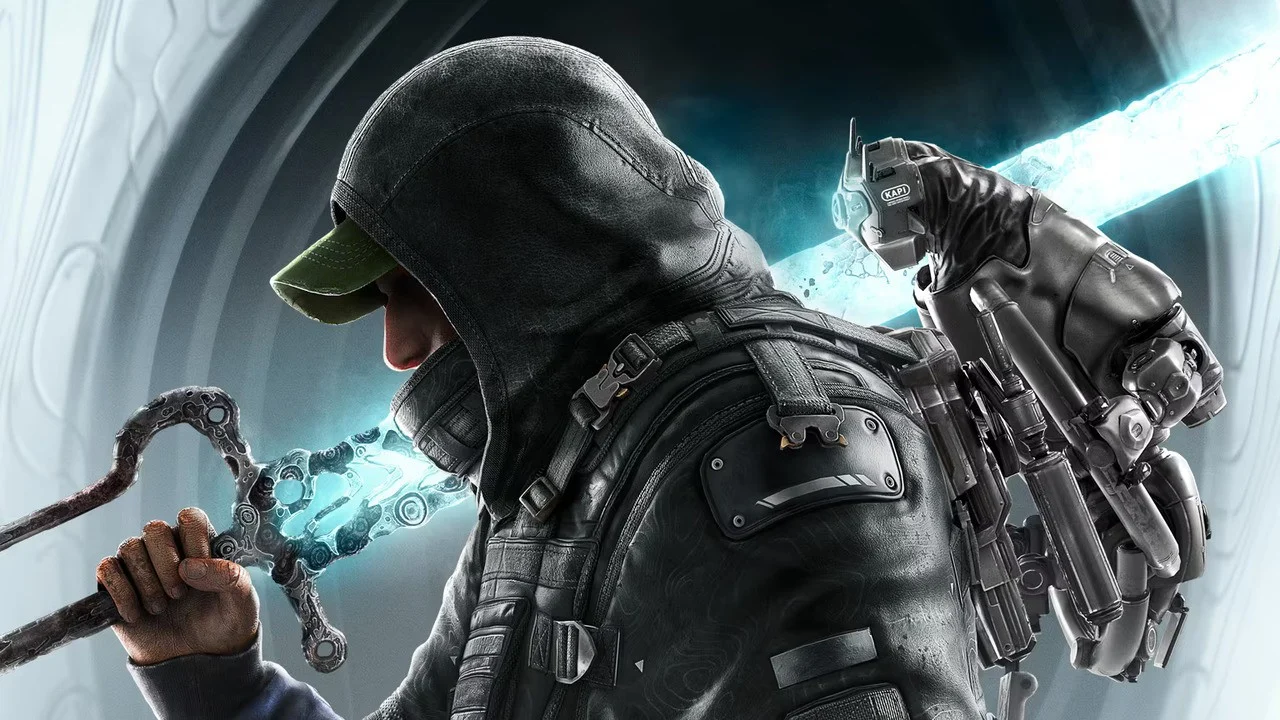
However, when you get the chance to upgrade the myriad weapons you’ll cycle through, you find that you can button mash every now and again, which eases the pressure of every encounter. Instead of wishing I could sneak around some enemies, I found myself keen to test out the ability of my sword, which I infused with the power of fear itself. Never underestimate the power of a cool sword.
Visually, Hell is Us looks like your typical, grounded AAA game, complete with slightly uncanny valley human faces and a flat colour palette that can stray into Xbox 360 sludge in its worst moments. Its best moments are found in interiors with more striking lighting, or within memories and other supernatural events, a reprieve from wandering around uninspired forests and fields.
Captured on Nintendo Switch 2 (Docked)
It also feels under-optimised for Switch 2. The aforementioned pop-in is unflattering, but pairing it with regular frame drops makes for a bad look. I encountered a bug where Remì would attempt to climb a ladder, only to remain grounded but unable to do anything but run around. I also had the game completely crash and kick me back to the Switch 2 home screen. I’d understand if its (delayed) late-October release date was reversed to potentially be part of the discourse, but the Switch 2 port could have done with more time in the oven.
Conclusion
Hell is Us makes a statement about what we want from games, deconstructing the AAA formula to give the player more agency rather than holding their hand. In doing so, it comments on the nature of humanity through its brutal, difficult, war-torn world.
However, its design can also make for a frustrating experience, especially when paired with some unflattering pop-in and slowdown.