


Luxury SUVs have built their reputations on comfort. They glide over rough roads, keep road noise to a minimum, and make long journeys feel effortless. The catch is that buying one often means paying luxury-car maintenance bills once the warranty runs out.
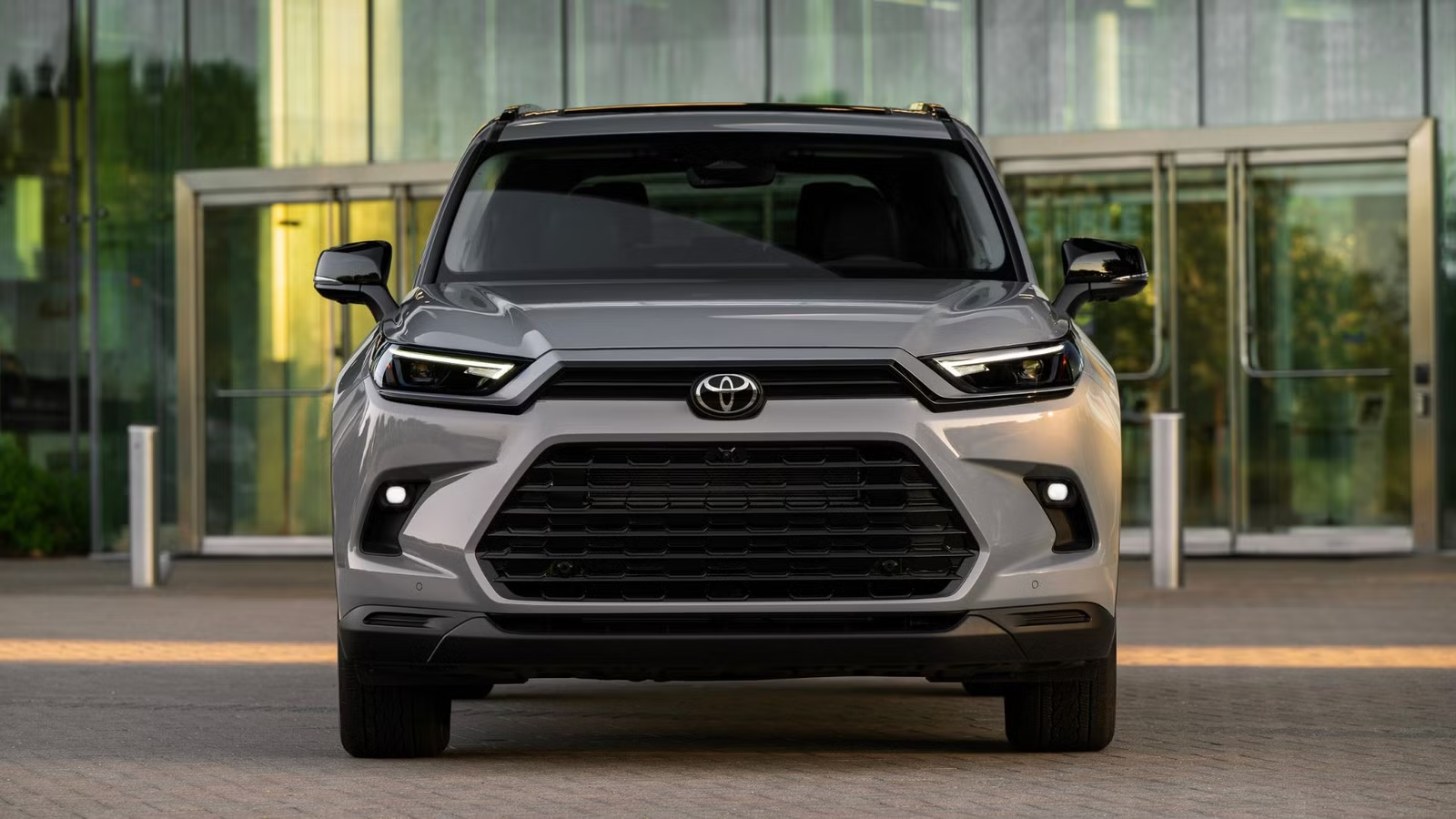
Thankfully, that’s no longer the only way to get that kind of driving experience. One three-row family SUV delivers much of the comfort buyers expect from a Range Rover while offering the kind of long-term reliability its manufacturer is known for.
It won’t fool anyone into thinking it’s a luxury SUV, but if your priorities are comfort, practicality, and dependability, it might be a smarter buy.
Related
10 Great Three-Row SUVs You Can Buy for Under $40,000
Value, comfort, and versatility for families alike—these spacious three-row SUVs for under $40,000 tick all the boxes.
What makes an SUV feel truly premium?
Ride comfort matters more than horsepower
Credit: Toyota
When people think of luxury SUVs, they usually picture big engines and expensive badges. But that’s not really what makes them feel premium day to day. It’s the way they soak up rough roads, keep the cabin quiet, and leave you feeling relaxed after a long drive.
For years, that kind of refinement was something you had to pay Range Rover money for. Today, though, plenty of mainstream SUVs have closed the gap. Better suspension tuning, stiffer platforms, and improved sound insulation mean some family SUVs now deliver a surprisingly upscale driving experience without the luxury price tag.
That raises an obvious question: if a mainstream SUV can deliver most of the same comfort, is paying extra for the badge still worth it?
Related
A comprehensive guide to every Toyota SUV on sale in 2026
From compact to full-size, here’s the complete Toyota SUV lineup.
The Grand Highlander feels far more premium than its badge suggests
The top trims offer genuine luxury touches without the luxury price
If you step inside a well-equipped Grand Highlander, it’s immediately obvious Toyota wasn’t aiming for “good enough.” The Limited and Platinum trims come with many of the features you’d expect to find in far more expensive luxury SUVs.
Leather upholstery, ventilated front seats, heated second-row seats, ambient lighting, a JBL premium audio system, and a fully digital instrument cluster all come standard on the Limited. The Platinum adds extras like a panoramic sunroof, a head-up display, a digital rearview mirror, a 360-degree camera system, and Traffic Jam Assist.
It’s not trying to compete with a Range Rover for prestige or handcrafted materials, but in terms of everyday comfort and convenience, the gap is much smaller than the price difference suggests. Even a fully-loaded Grand Highlander costs roughly half as much as a long-wheelbase Range Rover.
Related
The SUV That Redefines Luxury for Families on a Budget
An affordable family SUV with tons of class.
The powertrain plays a big part in the experience
Smooth, effortless performance comes standard
Credit: Toyota
The Grand Highlander is available with three different powertrains, but the Hybrid Max is easily the standout. It pairs a turbocharged 2.4-liter four-cylinder engine with Toyota’s hybrid system to produce a combined 362 horsepower and 400 lb-ft of torque.
Those numbers aren’t just impressive on paper—they make the SUV feel surprisingly effortless to drive. There’s plenty of power for merging onto the highway, climbing steep grades, or overtaking slower traffic without the engine feeling strained.
Base Trim Engine
2.4L I-4 ICE
Base Trim Transmission
8-speed automatic
Base Trim Drivetrain
Front-Wheel Drive
Base Trim Horsepower
265 HP @6000 RPM
Base Trim Torque
310 lb.-ft. @ 1700 RPM
Base Trim Fuel Economy (city/highway/combined)
21/28/24 MPG
Base Trim Battery Type
Lead acid battery
Make
Toyota
Model
Grand Highlander
Unlike many hybrids that rely on an eCVT, the Hybrid Max uses a conventional six-speed automatic transmission. That gives acceleration a more natural feel while helping the powertrain stay quiet and relaxed during everyday driving.
It’s also quick. Toyota says the Grand Highlander Hybrid Max can reach 60 mph in around 5.6 seconds, making it one of the quickest three-row family SUVs on sale. You may never use all that performance, but having it in reserve makes the SUV feel refined rather than hard-working.
Related
The forgotten Toyota SUV that’s a better buy than the RAV4
The discontinued Toyota Venza offers RAV4 Hybrid efficiency with a more premium feel—and it’s often closer in price than you’d expect.
It’s the comfort that draws the comparison
This is where the Grand Highlander punches above its weight
Credit: Toyota
Nobody is going to mistake a Grand Highlander for a Range Rover. The materials aren’t as lavish, and it doesn’t have the same level of craftsmanship. But once you’re on the move, the difference isn’t nearly as dramatic as the price tags suggest.
Toyota has done an excellent job keeping the cabin quiet, while the suspension does a great job smoothing out broken pavement without feeling floaty. With spacious, comfortable seating and plenty of room in all three rows, it’s an SUV that’s genuinely comfortable to spend hours in.
The Grand Highlander also makes good use of its size. There’s generous space for adults in the first and second rows, while the third row is usable enough for older kids or adults on shorter trips. Behind the third row, there’s still 20.6 cubic feet of cargo space—more than the long-wheelbase Range Rover offers.
If your idea of luxury is arriving after a long drive feeling fresh instead of worn out, the Grand Highlander delivers far more of that experience than its mainstream badge might suggest.
Related
This budget-friendly 3-row SUV gets 37 MPG and costs under $39,000
Big on passenger room, light on fuel costs and your budget.
Where Toyota really pulls ahead
Luxury SUVs rarely match these ownership costs
Side profile of a 2025 Toyota Grand HighlanderCredit: Toyota
A comfortable ride is only part of the equation. Keeping an SUV for years without constantly worrying about repairs is a different kind of luxury—and it’s one where Toyota has a clear advantage.
In J.D. Power’s 2026 Vehicle Dependability Study, Toyota finished near the top of the rankings, while Land Rover placed much lower. That doesn’t mean every Range Rover is unreliable, but it does highlight the difference in long-term ownership expectations between the two brands.
Running costs tell a similar story. RepairPal estimates the Toyota Highlander’s average annual maintenance and repair costs at around $489. The Grand Highlander is still relatively new, so long-term repair data is limited, but it’s expected to be in the same ballpark. By comparison, a Range Rover averages around $1,258 a year to maintain.
Toyota also backs every hybrid battery with a 10-year/150,000-mile warranty, giving buyers extra confidence that one of the most expensive components is protected long after the standard vehicle warranty expires.
Related
Forget the Mercedes GLC—this Toyota SUV feels way more luxurious
This Toyota SUV delivers GLC-level comfort, style, and tech without the luxury price tag.
It’s a luxury experience without the luxury price
Premium comfort makes a lot more sense when it doesn’t break the bank
Credit: Toyota
A well-equipped Grand Highlander isn’t cheap, but it looks like excellent value when you compare it with the luxury SUVs it borrows ideas from. The Limited starts at $56,090, while the range-topping Platinum comes in at $60,175.
That’s still roughly half the price of a long-wheelbase Range Rover, yet you still get a genuinely upscale cabin, three rows of seating, standard all-wheel drive, and performance that’s unusually quick for a three-row SUV.
It should also hold its value much better. CarEdge estimates the Grand Highlander will lose around 30 percent of its value over five years, compared with roughly 74 percent for a Range Rover over the same period.
For buyers who care more about everyday comfort than brand prestige, that’s a compelling combination. You get many of the qualities buyers associate with luxury SUVs without signing up for luxury-car ownership costs.