


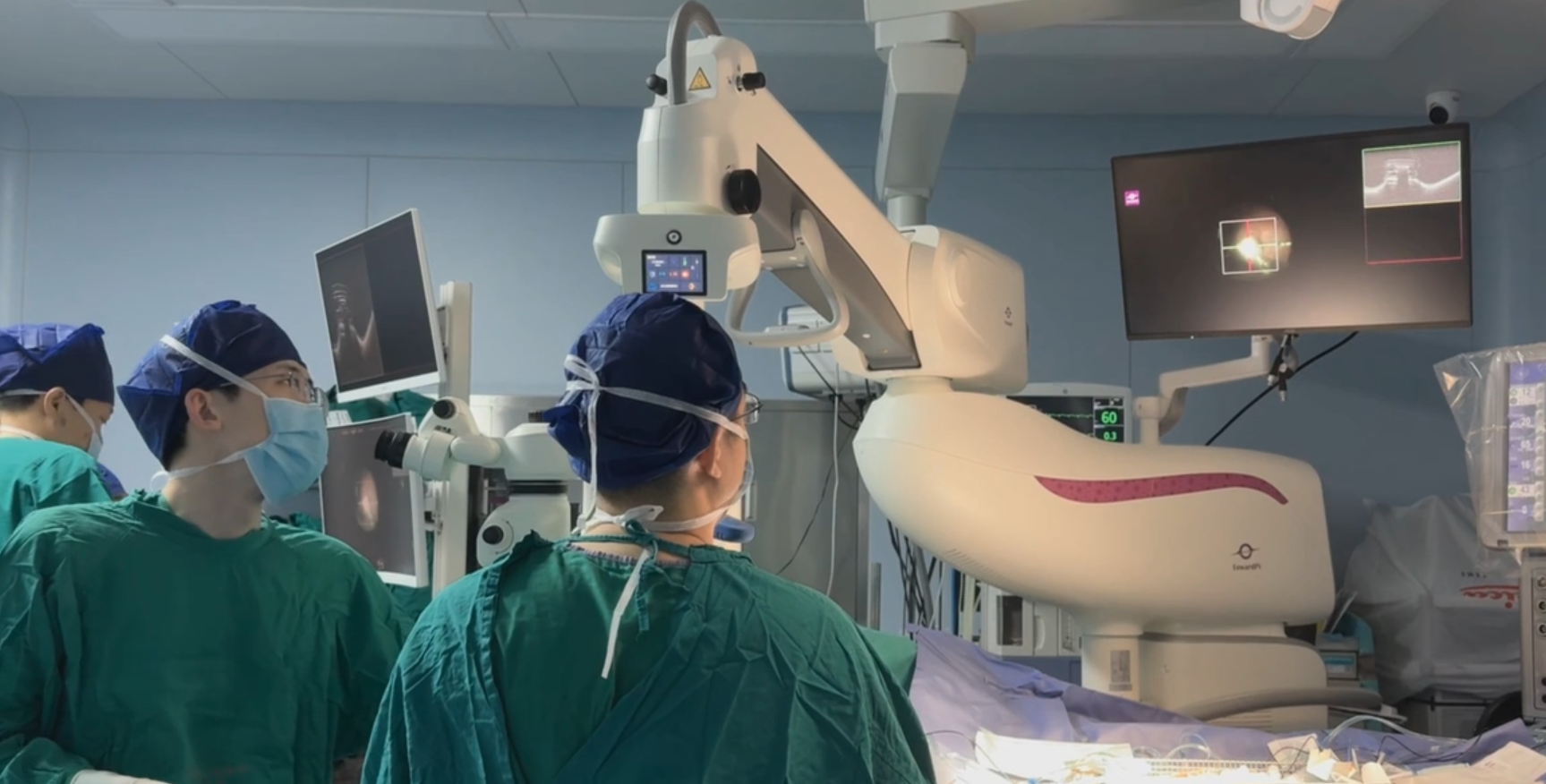
While it might seem that most big industry players in tech have more or less focused on pushing AI as the next big “innovation,” it should be said that there’s still a lot of progress being made in applications outside of consumer tech and electronics. Take for example the specialists at the Zhejiang Provincial People’s Hospital in China, who have been working on a way to help individuals with eyesight issues.
Through a landmark clinical trial at the hospital, a 40-year-old Chinese woman known as Lingling (not her real identity) has regained visual function after nearly 20 years of near-total blindness. State media outlet Xinhua reports that she is the first person in China to receive a homegrown, high-resolution retina-based visual brain-computer interface (BCI) implant.
For those unfamiliar, Visual Brain-Computer Interface (BCI) technology serves as a direct communication pathway between the human brain and an external device. The technology works by measuring brain activity in a patient’s visual cortex when they look at visual patterns, lights, or flickering targets on a screen, and then translating those neural signals into digital commands.
Following the initial procedure back in May, Lingling has undergone more than two months of targeted rehabilitation training, and is now making steady progress, such as learning to recognize letters, practice writing, and navigate indoor spaces with growing confidence. She comments:
On the first day the device was switched on, I saw flashes of light. When I told the doctors, they said “you are right,” it felt like I could really see again. The next day things became clearer, I recognized the letter “C,” then I recognized the letter “H.”
As such, the trial isn’t finished yet, as doctors say that there’s more fine-tuning to be done with the test as it progresses along.