

Close Menu
Techy101 –

    Subscribe to Updates

    Get the latest creative news from FooBar about art, design and business.

    What's Hot

    What Is Natural Language Processing (NLP)? How Machines Understand Language – Unite.AI

    September 9, 2026

    FromSoftware patches Elden Ring to stop players sharing the Tarnished Edition Switch 2 extras for free

    September 9, 2026

    DETECTIVE VR Review – Way Too Much Jank For Its Own Good

    September 9, 2026
    Facebook X (Twitter) Instagram
    Trending
    • What Is Natural Language Processing (NLP)? How Machines Understand Language – Unite.AI
    • FromSoftware patches Elden Ring to stop players sharing the Tarnished Edition Switch 2 extras for free
    • DETECTIVE VR Review – Way Too Much Jank For Its Own Good
    • Your router’s power adapter is sabotaging your connection, and here’s the quick fix
    • With laptop prices up, here’s what’s actually worth paying for
    • US Authorities Accuse Chinese AI Companies Of Industrial-Scale Campaigns To Copy American Models
    • New iPhone 18 Pro price rises perhaps not as bad as some feared
    • Leaked Persona 6 Achievements Reveal Setting and Key Story Details
    Facebook X (Twitter) Instagram Pinterest YouTube LinkedIn TikTok
    Techy101 –Techy101 –
    • Home
    • Laptops
    • Mobiles
    • Gaming
    • Gadgets
    • Apps
    • AI
    • How To
    • Reviews
    Techy101 –
    Home»Gadgets»The 2026 Midterms Are Coming. Political Deepfakes Are Already Here
    Gadgets

    The 2026 Midterms Are Coming. Political Deepfakes Are Already Here

    By RepublisherAugust 29, 2026No Comments5 Mins Read
    Share Facebook Twitter Pinterest LinkedIn Tumblr Reddit Telegram Email
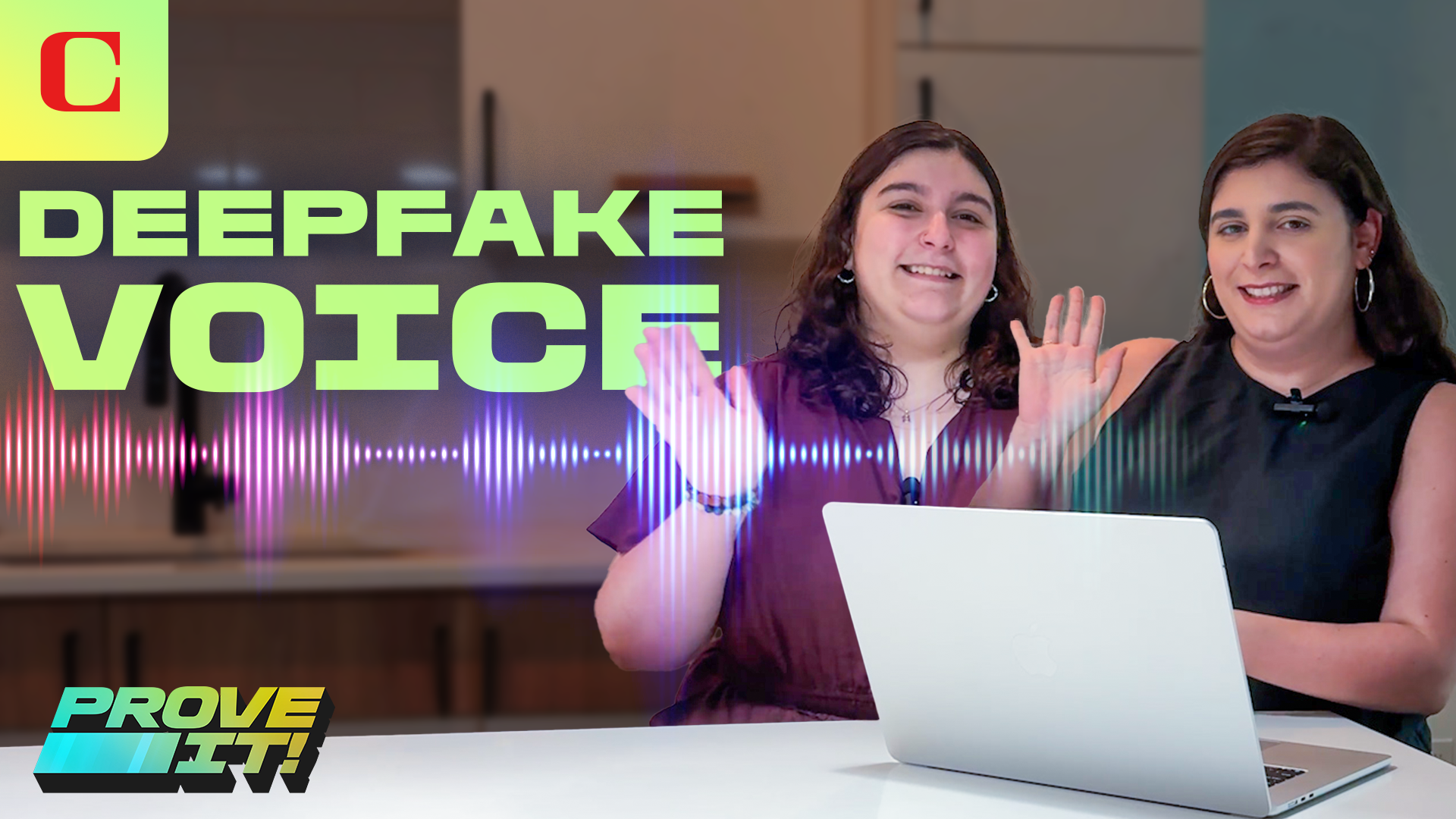
    CNET video thumbnail reading "Deepfake voice" and Prove It. The podcast host and guest are waving. An audio wave graphic is overlaid.
    Share
    Facebook Twitter LinkedIn Pinterest Email


    Scammers have always tried to trick us into handing over our hard-earned money and personal information. But generative AI is making it even easier for them. Now, with the click of a button, they can create pretty decent content that looks and sounds just like us. This is called AI impersonation, and it’s a growing problem.

    Celebrities, public figures and politicians are all high-profile deepfake targets. As we approach what is likely to be consequential and controversial midterm elections in November, we need to prepare now.

    AI-generated or synthetic media is the new norm, thanks to tech companies like OpenAI, Google and Meta. AI image and video generators can create and edit content easily, no advanced Photoshop skills required. AI makes it easier to make more fake content and quickly distribute it widely. Bobby Ford, chief strategy and experience officer at Doppel, told me that this problem can be thought of as the three V’s: volume, velocity and vectors.

    “Before, it would take a threat actor a certain amount of time, as well as resources, in order to create that deepfake. Take that same amount of time, and it’s done at much faster clips, so the volume (and velocity) increases,” Ford said. New vectors, like video, audio and email, are also available as AI tools and have become increasingly multimodal, he said, “so we’ve seen those three V’s increase.”

    But the goal of synthetic media isn’t always to make a flawless imitation of a politician or public figure. It’s often used to make us believe the fake content is real — to manipulate our emotions and get us to override our better judgment. That ability to influence our beliefs matters a lot, especially in politics.

    AI is already embedded in politics

    During the 2024 primary presidential election, thousands of voters in New Hampshire got surprise robocalls from Joe Biden, urging them not to vote the night before the election. Except, it wasn’t Joe Biden. It was an AI deepfake, and voters struggled to tell the difference. The Biden campaign tried to let people know it was fake, but the damage was already done.

    Political campaigns “may not have the tools for cybersecurity, but they’re also out there in the world using all the platforms that the bad actors use in order to reach the same group of people,” said Michael Kaiser, president and CEO of the nonprofit Defending Digital Campaigns. “That makes it extremely difficult to operate in this environment.”

    The goal is to erode trust and sow chaos during election season and beyond. In July, Sen. Mitch McConnell’s office released a picture of him during his recent hospitalization. Users on social media immediately began questioning whether it was real. Many folks shared the theory that the photo was either old or edited with AI tools. Digital forensics experts found no evidence that it was old or digitally altered. But we live in a world where that’s one of our first thoughts.

    “If that photo had been released two years ago, it would have taken me probably a good seven or eight hours to doctor that photo,” Ford told me. “But now, with generative AI, all I need to do is copy that photo, drop it into an app, give it some plain language commands and within 30 seconds, I can have 10 different versions of that same photo, and then I can send those 10 different versions to my friends.”

    It’s that speed and ease that help bad actors flood the internet and our phones with this spammy or scammy content. But while the tech may be new, the tactics they use aren’t. They can intentionally craft the messages to have a strong urgency so you don’t pause to think about a reply. For example, if you get a text telling you that your polling location has been changed right before election day, you might not stop to question whether it’s true before you click a malicious link.

    “The point of this media is the manipulation of your emotions,” Kaiser said.

    So one of the best ways to fight back is to take a breath, step back and think before you do anything rash — and ask why this message is being sent to us. But that’s easier said than done sometimes.

    “Now I don’t need to do a bunch of research on (people) in order to target (them),” Ford said. “I could go to some app and have it write either an email or have it develop some synthetic voice based on open-source intelligence it can gather on you — that’s the difference.”

    Katelyn Chedraoui


    Reporter 2


    Katelyn is a reporter with CNET covering artificial intelligence, including chatbots, image and video generators. Her work explores how new AI technology is infiltrating our lives, shaping the content we consume on social media and affecting the people behind the screens. She graduated from the University of North Carolina at Chapel Hill with a degree in media and journalism. You can reach her at kchedraoui@cnet.com.

    See full bio


    Source link

    Coming Deepfakes Midterms political
    Share. Facebook Twitter Pinterest LinkedIn Tumblr Email
    Previous ArticleDeals: the Galaxy S26 FE is coming, Galaxy S26 series on sale, Nothing Phone (3) also discounted
    Next Article Should You Shade Your Outdoor Air Conditioner Unit In The Summer?
    Republisher
    • Website

    Related Posts

    Gadgets

    US Authorities Accuse Chinese AI Companies Of Industrial-Scale Campaigns To Copy American Models

    September 9, 2026
    Gadgets

    Girl Scouts Unleash Treats for Dogs and Allergy-Safe Cookies for Humans

    September 9, 2026
    Gadgets

    Huawei Mate XT 2 Tri-Fold Launched: Specs, Privacy Display, And Features 

    September 9, 2026
    Add A Comment
    Leave A Reply Cancel Reply

    Top Posts

    What Is Natural Language Processing (NLP)? How Machines Understand Language – Unite.AI

    September 9, 2026

    AMD is apparently gearing up to raise GPU prices right after Nvidia’s steep hike

    August 1, 2026

    LanceDB Vector Database Guide: Features anndPython Demo

    August 1, 2026
    Stay In Touch
    • Facebook
    • YouTube
    • TikTok
    • WhatsApp
    • Twitter
    • Instagram
    Latest Reviews

    Subscribe to Updates

    Get the latest tech news from FooBar about tech, design and biz.

    Latest Post

    What Is Natural Language Processing (NLP)? How Machines Understand Language – Unite.AI

    September 9, 2026

    AMD is apparently gearing up to raise GPU prices right after Nvidia’s steep hike

    August 1, 2026

    LanceDB Vector Database Guide: Features anndPython Demo

    August 1, 2026
    Recent Posts
    • What Is Natural Language Processing (NLP)? How Machines Understand Language – Unite.AI
    • FromSoftware patches Elden Ring to stop players sharing the Tarnished Edition Switch 2 extras for free
    • DETECTIVE VR Review – Way Too Much Jank For Its Own Good
    • Your router’s power adapter is sabotaging your connection, and here’s the quick fix
    • With laptop prices up, here’s what’s actually worth paying for

    Subscribe to Updates

    Get the latest creative news from FooBar about art, design and business.

    Facebook X (Twitter) Instagram Pinterest YouTube LinkedIn TikTok
    • About Us
    • Contact Us
    • Privacy Policy
    • Terms & Conditions
    • Disclaimer
    © 2026 techy101. Designed by Pro.

    Type above and press Enter to search. Press Esc to cancel.