


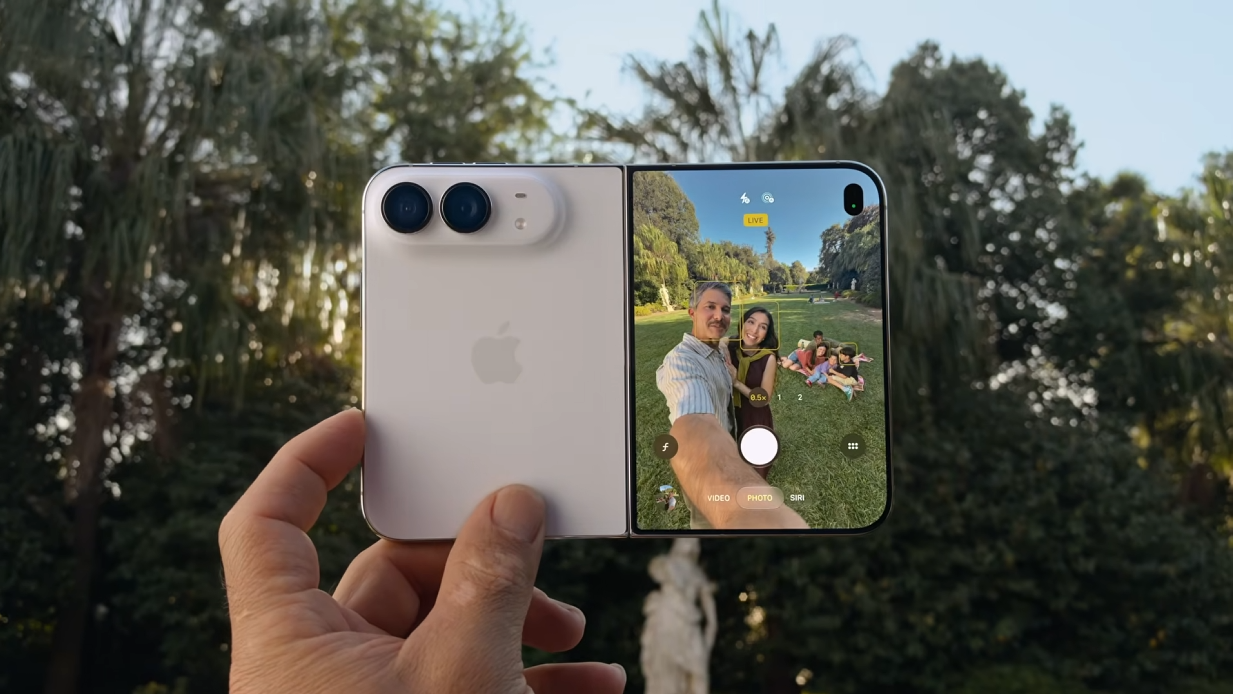
Apple’s iPhone Duo starts at $1,999 and brings Apple Pencil support to an iPhone for the first time. That’s worth talking about. But after watching the early hands-on videos, what actually sold me wasn’t the hardware. It was the software.
Every Other Foldable Just Blows Up the Screen
Samsung and Google have built solid multitasking into their foldables for years. The Galaxy Z Fold’s Taskbar runs apps in split screen or pop-up view, the Fold 8 even supports three apps side by side, and One UI lets you move the navigation bar for easier one-handed reach. But most of that lives behind settings menus you have to find and turn on yourself.
Apple built all of that into iOS 27 as the default. According to Apple’s own announcement, the dock, Lock Screen controls, and navigation move to the side automatically once the iPhone Duo is open, so your thumb doesn’t have to stretch to the middle of a 7.6-inch display. Split View runs two apps side by side without digging through a settings menu first.
According to MacRumors’ hands-on with the device, two apps can be locked together as a pair so the same combination launches automatically next time. Content also slides away from the crease as you adjust the fold angle, so tap targets stay usable no matter how open the phone is. Prop it up like a small tent, and the controls shift again toward the bottom of the display. That’s not really something we have seen from other foldables.
The Hardware Still Has Real Gaps
None of this means the iPhone Duo is hardware-perfect. The under-display FaceTime camera carries the same limitations we’ve seen on other foldables that hide a camera beneath the screen. From what we have seen, photos using the under-display camera look soft and washed out.
There’s also no dedicated telephoto lens, just a 48-megapixel main and ultrawide. Touch ID replaces Face ID too, since there’s nowhere else in this design to fit the sensors Face ID needs. Those are legitimate shortcomings. But they don’t change how the phone feels to actually use, which is where the software is doing the heavy lifting.
Apple Pencil Is A Game Changer
Stylus support on a foldable isn’t new. Samsung built the Galaxy Z Fold around the S Pen for years, only to quietly drop it starting with the Z Fold 7 to shave the phone down to under 9mm thick. The Fold 8 and Fold 8 Ultra don’t support it either, and Samsung’s own hardware VP has only said the company is still exploring ways to bring it back.
Apple picking up a feature Samsung walked away from is saying something. What makes it matter more is that the Apple Pencil already has years of use on the iPad, in a way the S Pen never quite matched. You don’t need to carry a separate notebook or dig out an iPad just to jot something down anymore. And if an app like Procreate ever brings a version built for this screen, that alone could change how people think about what a phone is for.
The Fold Was Never the Point
Apple is arriving in the foldable category seven years after Samsung’s first Galaxy Fold, and it shows in how deliberate the iPhone Duo feels. The hardware has real trade-offs, and anyone weighing a $1,999 purchase should go in with eyes open about the camera and Face ID compromises.
But the fold itself was never going to be what separates this phone from a Galaxy Z Fold or a Pixel Fold. Software is. And Apple looks like the first company in this category that actually asked what a foldable should do differently, instead of just making an existing phone bigger.