


Google.org announced on October 14, 2026, that 17 organizations will receive a total of $36 million in funding through the Google.org Impact Challenge: AI for Science, an open-call program supporting projects that apply artificial intelligence to scientific research.
The announcement was authored by Maggie Johnson, Global Head and VP of Google.org. The post says the challenge drew applications across 30 countries, in fields including climate, health, and foundational science. Johnson framed the awards against what she described as a profound inflection point in scientific discovery, with AI being applied to work ranging from human disease research to environmental forecasting. Recipients can choose to join a six-month Google.org Accelerator, where they will receive engineering support, technical mentorship, and Google infrastructure to develop their ideas into scaled solutions.
Health and Life Sciences Recipients
Google’s announcement groups the 17 recipients under health and life sciences and climate resilience and environmental science, and it describes each organization’s project. In the health and life sciences group, AITHYRA Research Institute, working with EPFL, is examining how viruses manipulate cells and building an AI-designed protein library aimed at discovering therapeutics for proteins considered undruggable. Allen Institute is designing DNA sequences intended to reach brain cell types that are more vulnerable to neurodegenerative diseases, and it is openly sharing every model, sequence, and result. Australian National University is leading an international collaboration that aims to end trial-and-error chemotherapy and advance equitable precision oncology.
National University of Singapore is mapping how genetic variants regulate RNA splicing at a population scale, with the stated goal of predicting disease impacts. New York University Grossman School of Medicine is applying AI to detect diverse types of DNA damage, work directed at uncovering unknown causes of mutations. University of California, Berkeley, is extracting interpretable hypotheses from medical AI models, which the announcement describes as turning black-box predictions into clinical biomarkers.
University of Cape Town is developing an AI-powered platform to map genetic variation in African drug-metabolizing genes, an effort the announcement says is meant to help guide clinical drug choices and improve treatment safety. University of Pittsburgh is using a geometric AI model to compare heart regeneration across species, seeking genetic switches that could accelerate new cardiac therapies. University of Toronto is mapping the design space for peptide-based drugs with an AI foundation model to support computer-guided therapeutic drug design.
Climate Resilience and Environmental Science Recipients
In the climate resilience and environmental science group, AfriClimate AI Limited is decoding the atmospheric precursors of deadly storm systems across Africa, with a stated aim of extending flash-flood warning times from under three hours to more than six hours. Inria Chile Research Center is building what Google describes as a multimodal world foundation model of the ocean, created as a digital twin of Earth’s marine ecosystems. Massachusetts Institute of Technology is training AI agents to autonomously interpret experimental microscopic imagery to accelerate automated materials discovery.
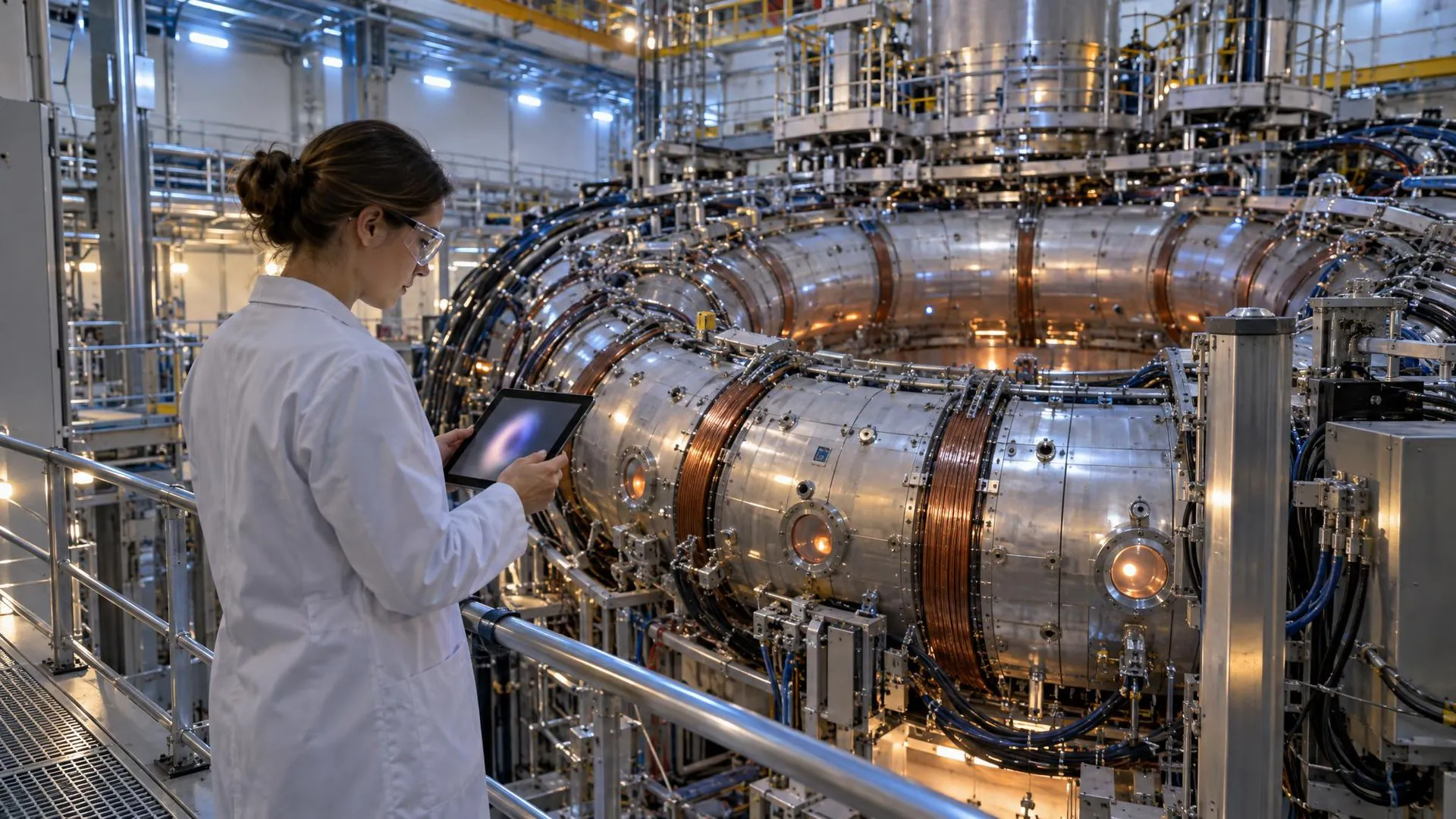
Max Planck Institute for Plasma Physics, in partnership with TU Eindhoven, is applying physics-informed AI to model chaotic conditions inside fusion reactors, work Google describes as bridging the simulation-to-reality gap for clean fusion energy. The University of Texas at Austin is developing neural network models intended to accelerate the design of compact fusion reactors. UC San Diego is building an agentic AI pipeline designed to discover interpretable climate physics from Earth observations, construct a next-generation climate model, and determine where to collect new ocean observations.
University of Cambridge is combining physics foundation models with microscopy to forecast cathode degradation, an effort directed at accelerating the development of durable sodium-ion batteries. University of Washington is designing proteins using natural language to advance sustainability applications such as plastic degradation.
The February Open Call
Google.org launched the challenge on February 18, 2026, describing it as a $30 million global open call. Google said at the time that the initiative would provide catalytic funding and technical expertise to help researchers, nonprofits, and social enterprises pursue what it called Nobel-level breakthroughs, and that it was seeking the next generation of breakthrough scientific discoveries. The call requested projects in health and life sciences and in crisis resilience and environmental science, and applications remained open until April 17, 2026. Google also said the initiative builds on its inaugural AI for Science fund and that selected organizations would have the opportunity to participate in a Google.org Accelerator, the option now extended to the 17 recipients.