


Image: Damien McFerran / Nintendo Life
As part of its latest financial report, Nintendo has published the yen value of its inventory for the second quarter of FY2026/27, showing a record high as the company attempts to mitigate rising costs across the industry.
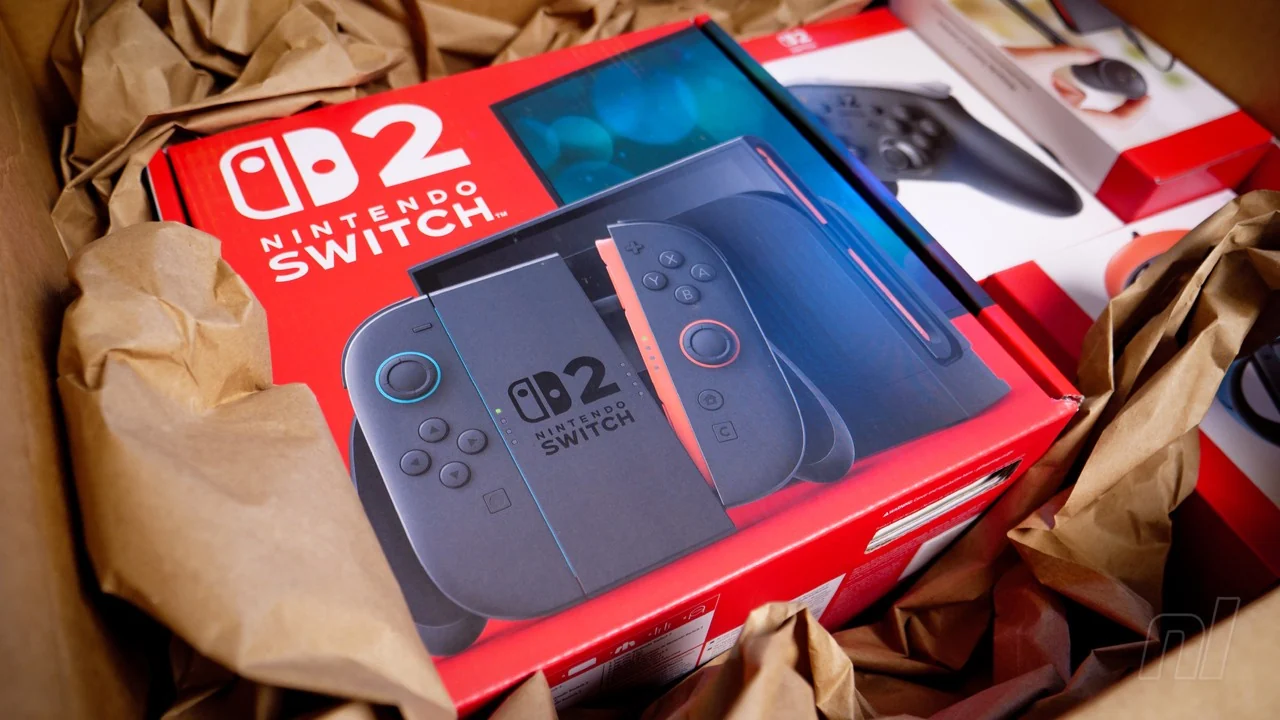
The latest quarterly report states that the platform holder has 814.57 billion yen’s worth (approximately £3.8 billion / $5.14 billion) of inventory in its warehouses as of 30th September. That’s an increase from 539.8 billion yen the previous quarter.
As highlighted by Nintendo Patents Watch, this is a new record for the firm as manufacturers across tech sectors navigate the global RAM shortage and attempt to avoid — or at least delay — further price increases.
Another quarter, another new record of inventory level. In just three months, Nintendo increased the inventories by ¥197B to a total of ¥815B (~US$5.15B). This is an astronomical number for a video game company, but is necessary to hedge against rising memory costs.
— Nintendo Patents Watch (@ninpatentswatch.bsky.social) 2026-11-05T07:45:08.075Z
Nintendo raised the cost of Switch 2 worldwide earlier this year, following in the footsteps of Sony and Microsoft, who have hiked hardware prices multiple times in recent years.
It’s a tough time for the industry, with recent reports suggesting that Microsoft’s next Xbox could cost as much as $1800. The massive costs of developing and manufacturing systems and sourcing the necessary memory and components arguably put Nintendo in a better position than the competition in the short term, as both PS5 and Xbox Series X|S launched in 2020 compared to 2025 for Switch 2.
Nintendo managed to build a substantial inventory of Switch 2 units prior to launch and will want to have as many units as possible available ahead of the holidays following today’s launch of Zelda: Ocarina of Time and the recent Zelda 40th Anniversary Switch 2.
Image: Gemma Smith / Nintendo Life
It is worth noting that Nintendo’s research and development costs rose 16.8% to 96.2 billion yen this quarter. This lends credence to rumours that the firm may be developing a ‘Switch 2 Lite’ or other hardware, although we wouldn’t expect to see any revised hardware announcements anytime soon.
For comparison, Switch Lite arrived in 2019, two-and-a-half years after the launch of Switch 1. Assuming a similar timescale, Holiday 2027 could be the target launch window for a hypothetical Switch 2 Lite, but given the industry climate and challenges — not to mention the wider economy — that feels ambitious.
Let us know your thoughts below.
Gavin first wrote for Nintendo Life in 2018 before joining the site full-time the following year, rising through the ranks to become Editor. He can currently be found squashed beneath a Switch backlog the size of Normandy.