

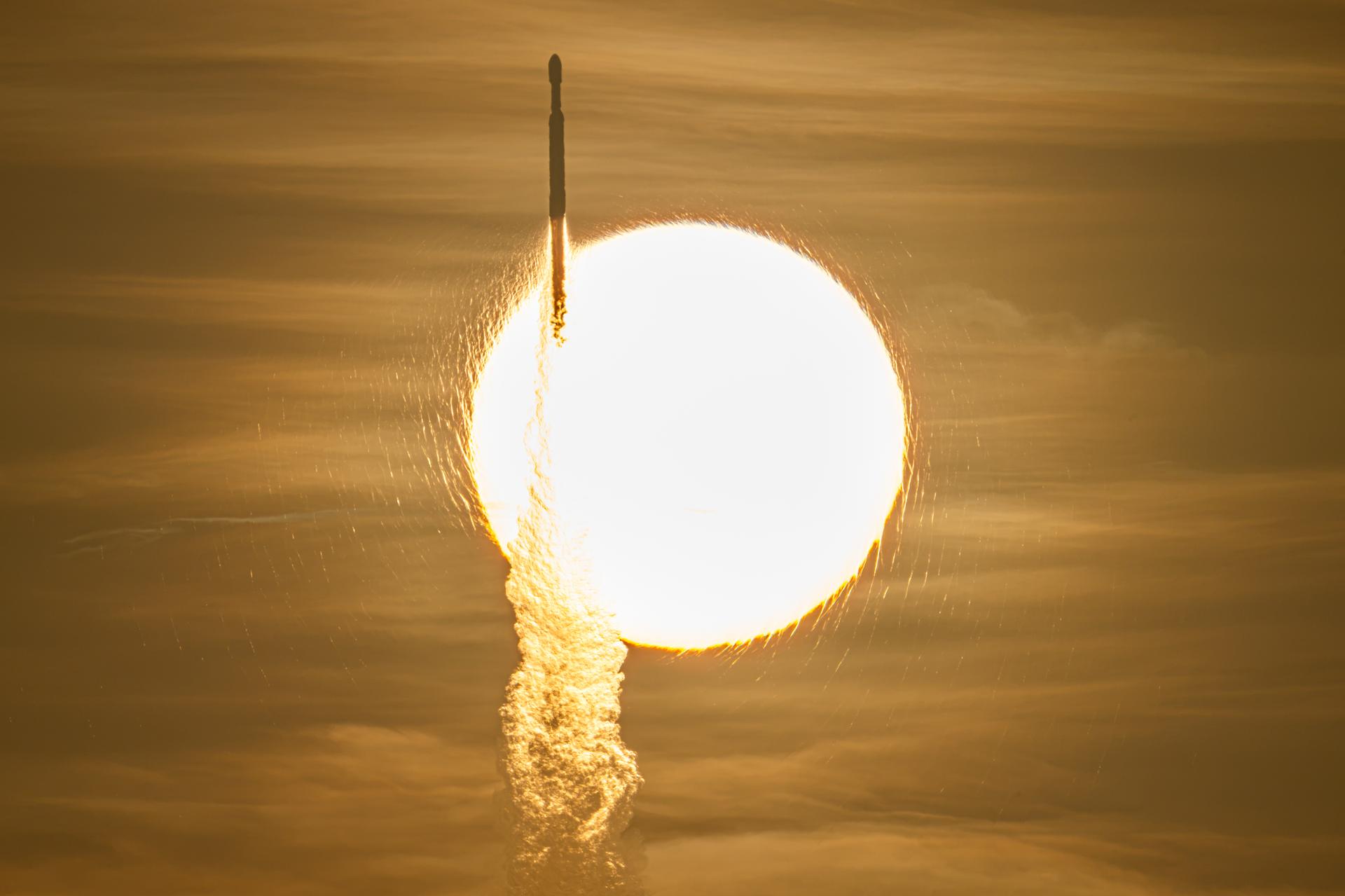
NASA has finally pushed through with its launch of the Nancy Grace Roman Space Telescope, which took to the skies on Sunday at 7:26 a.m. EDT aboard a SpaceX Falcon Heavy rocket. The telescope’s launch was conducted from the Kennedy Space Center, and is now on a mission to investigate dark energy, dark matter, and exoplanets. NASA Administrator Jared Isaacman states:
Roman is exactly the kind of success story we want to see across NASA… Delivered ahead of schedule and on budget, this mission reflects more than a decade of dedication from the NASA workforce and our industry partners. Now, Roman will give us a new atlas of the universe, push the boundaries of discovery, and demonstrate what is possible when America’s space program pairs bold ambition with disciplined execution.
Roman uses a massive field of view and sharp infrared vision to capture cosmic panoramas, and is designed to survey the sky 1,000 times faster than the Hubble Space Telescope. The observatory is also capable of generating 1.4 terabytes of data daily, and uses a combination of artificial intelligence, machine learning, and citizen scientists to process the findings.
Following the launch, Roman is now under the guidance of the Deep Space Network, which will maintain continuous communication as the telescope travels to its final orbit at the L2 Lagrange point, roughly one million miles from Earth. Over the coming days, controllers will deploy the high-gain antenna, initiate course corrections, and power on the Coronagraph Instrument, which is designed to snap direct pictures of Jupiter-like planets.
READ: NASA Urgently Needs Workers: New $10.5M Initiative Creates Jobs
A few weeks into the journey, NASA will activate Roman’s primary Wide Field Instrument, a 300-megapixel infrared camera powered by 18 individual 4K detectors. Scientists will spend three months running the observatory through different tests, and NASA expects to release Roman’s first official images by early 2027.