


Disclosure: When you purchase through links on our site, we may earn an affiliate commission.
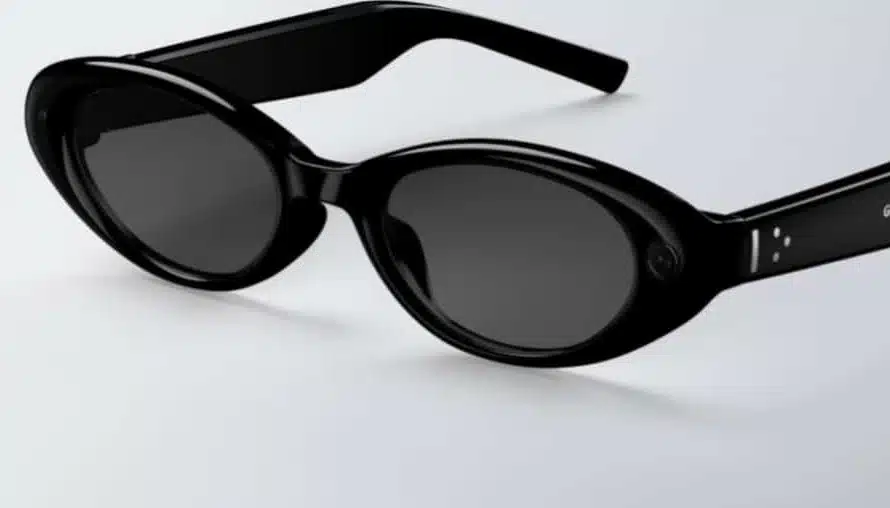
Samsung is yet to launch its smart glasses unveiled some months back. The tech giant isn’t slowing down either as it’s pushing in the development of its second-generation smart glasses with a colour display.
The Elec reveals that Samsung has initiated the development of its first display-equipped smart glasses. These glasses can show data directly on the lenses.
Reports state that Samsung sent a formal request to Samsung Display in August to develop a microdisplay panel, listing major requirements like: form factor, active display area, colour reproduction capabilities, and target pricing. The brand is considering a compact panel measuring 0.2 inches or smaller to fit comfortably inside a standard eyeglass frame. This will use an optical magnification system to project images from the microdisplay into the user’s field of view.
The aim of the company is to show concise, glanceable information like: text, system icons, notifications, and navigation arrows directly in front of the eye, instead of on one side of the glass just like the Meta Ray-Ban Display. This means Samsung is targeting a 4-bit gradation level (16 brightness levels per colour channel). Also, the glasses will produce fewer colours than a typical smartphone or smartwatch display. The primary engineering challenge is to achieve a wide field of view (FOV) across the lens while balancing colour output and production costs.
However, Samsung hasn’t revealed if the glasses will come with a monocular configuration (a single display for one eye) or a binocular setup (displays for both eyes). Industry insiders project White OLEDoS (W-OLEDoS) the most commercially viable option due to mature yields and lower costs. W-OLEDoS combines white OLEDs on a silicon backplane with colour filters.
Moreover, RGB OLEDoS panels deliver direct colour without filters and they carry higher manufacturing costs and lower production yields. Also, LEDoS (MicroLED on Silicon) delivers superior brightness, though full-colour integration and production yields are still important bottlenecks.
Additionally, it’s expected that the glasses will launch either in the second half of 2027 or the first half of 2028. It isn’t clear yet what panel technology Samsung will choose.
Source 1, source 2.