


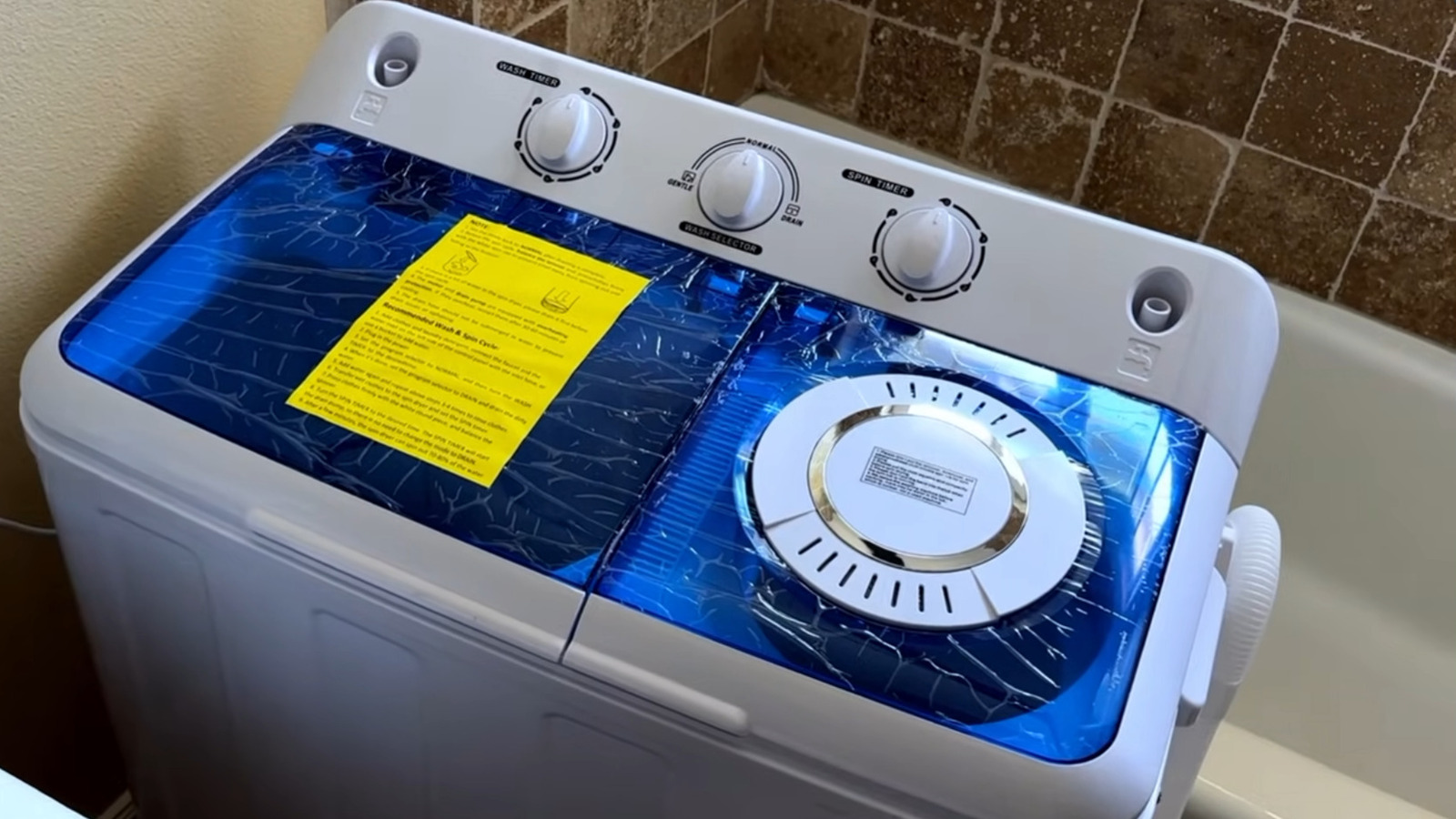
Washing machines have vastly simplified the task of doing laundry, but not all machines automate the process to the same extent. Plus, there are some washing machine models you should steer clear of because of well-documented issues with their manufacturing. While both semi-automatic and fully automatic washing machines can wash and rinse, they differ in how much you have to do between those steps.
For starters, with a semi-automatic washing machine, you’ll fill the wash tub, run the cycle, then move the clothes to the spin tub yourself. You’ll also have to step in manually to fill the water, drain it, and switch between the wash and spin cycles. On the other hand, with a fully automatic washing machine, you just toss in your clothes, hit start, and you’re pretty much done. This way, the machine does all the work for you, such as managing the water levels or cycle time.
A semi-automatic machine usually has two separate tubs, one for washing and one for spinning. It also comes with notable features like customizable wash settings or selectable water levels. Granted, there’s manual labor and more work involved, but this setup gives users more flexibility with their laundry, which makes these machines appealing if you like being in control of the process. You get none of this with a fully automatic washing machine since it has a single drum that handles every stage on its own. As such, this type offers better convenience and is a good choice for hectic households.
What are the downsides of fully automatic washing machines?
Brizmaker/Getty Images
Between these two choices, knowing which one suits you best and how it handles the load will also help you understand the average lifespan of a washing machine. That being said, a fully automatic washing machine is probably more appealing to everyday users, but that doesn’t mean it’s universally better. For instance, it’s generally more expensive than a semi-automatic washing machine. Additionally, due to their complex parts, fully automatic machines tend to have costlier repair and maintenance.
Another downside is that these types of washing machines require steady water pressure at home, which may be an issue depending on where you live. Speaking of water, one more issue is that if you pick the wrong cycle or load size, you’ll end up using a lot more water than needed with a fully automatic washing machine. However, it’s worth noting that fully automatic front-load machines often have the best water efficiency. In the end, it all comes down to your personal preference and household. Whatever you pick, don’t forget to clean your washing machine as often as you should – you might be surprised how often that is.