


Image credit – Nanyang Technological University, Singapore
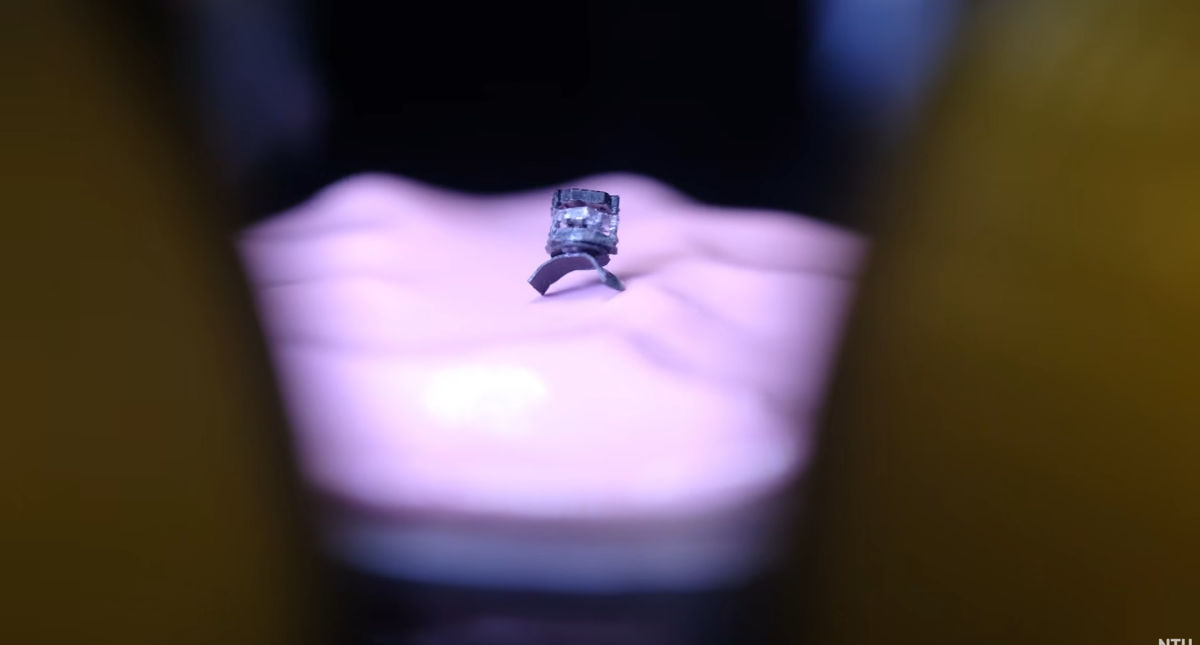
Scientists in Singapore have built a robot small enough to fit inside a seed pod, and it can do five different surgical jobs without anyone touching it. The tiny device can move, cut tissue, release drugs, grip and store samples, and generate heat, all controlled from outside the body using magnets.
The robot the size of a grain of rice
Researchers at Nanyang Technological University built the robot to measure just 4.4 millimeters long. That’s roughly the size of a sesame seed. Despite its size, it packs five separate tools into one body. It can switch between them in under a second. The team controls the robot with weak magnetic fields from outside the body, no wires or batteries needed.
Most tiny magnetic robots like this can only do one or two things. This one does five: moving, cutting, drug release, gripping and storing samples, and generating heat. The team built a special magnetic core inside the robot that can be magnetized in different directions.
Each direction switches on a different tool, similar to flipping through settings on a dial. The researchers also figured out how to make only one part of the robot respond to a magnetic field at a time, while the rest stays still. That’s a real engineering hurdle. Most robots this small tend to move as one single unit, making precise, targeted actions difficult.
Why scientists built this
The goal is bigger than a cool piece of engineering. Doctors could one day guide a robot like this through the body to reach hard-to-access areas, perform a biopsy, deliver medicine to a specific spot, or heat and destroy targeted tissue, all without a large incision. Lead researcher Associate Professor Lum Guo Zhan said his long-term goal is for doctors to use these mini robots inside the body to navigate to a target and carry out treatment there.
The team already tested the robot on real tissue, including chicken liver, and gelatin material that mimics human tissue. In these tests, the robot successfully cut tissue, released simulated drug particles, gripped and stored samples, and produced heat. The materials also passed a basic safety check. More than 99% of human skin cells stayed healthy after contact with the robot in lab tests.