


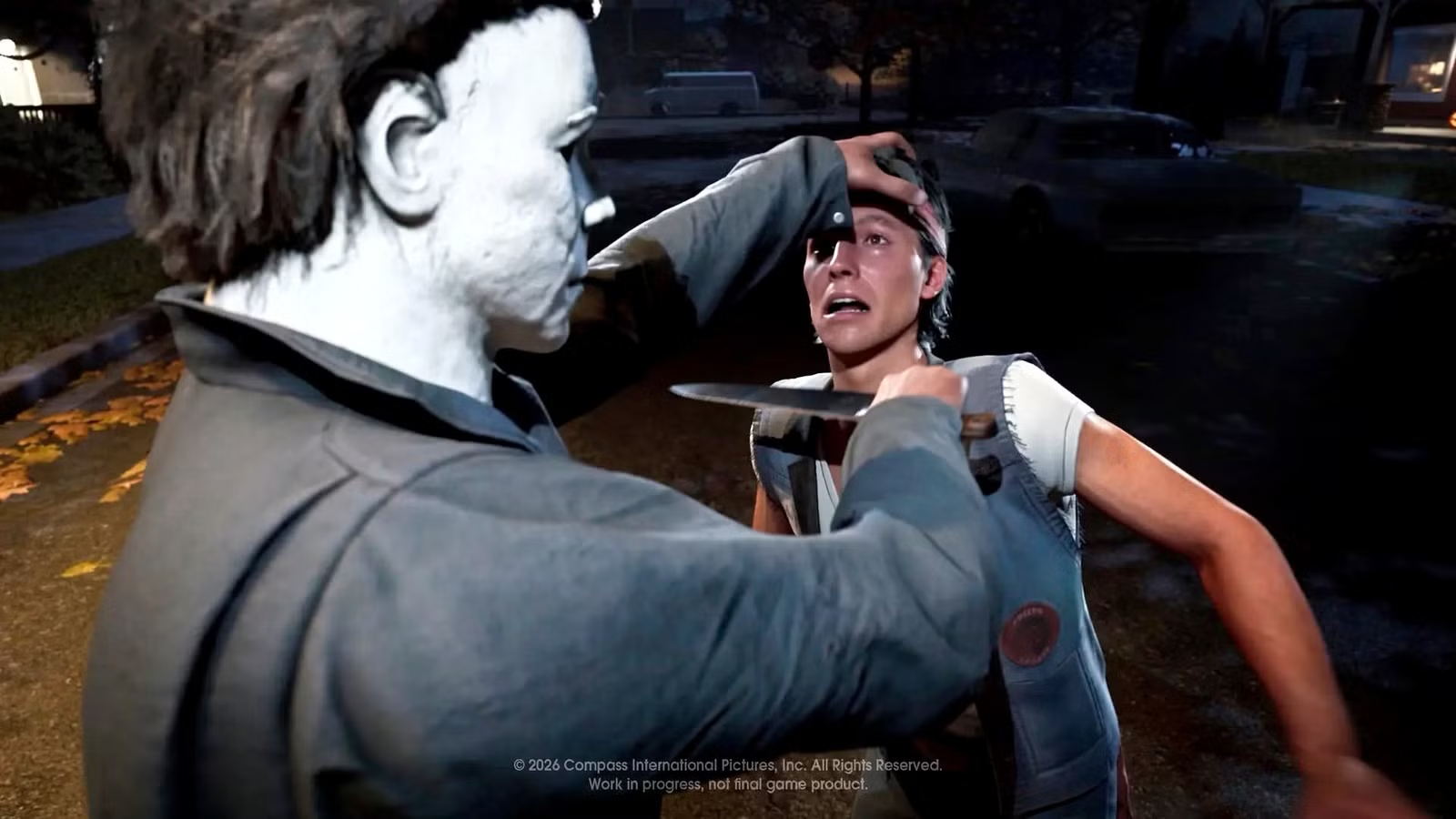
Horror game fans in Japan are waking up to some brutal news this morning, after one of the biggest genre releases of the year, Halloween: The Game, announced it will skip release on a major platform in the country.
Developers behind Halloween: The Game shared on X that their highly-anticipated multiplayer adaptation wouldn’t be released on PlayStation in Japan due to strong censor pushback. The game features “visceral violence and nudity” which has fallen foul of Japan’s strict rules on in-game gore, and IllFonic said they are not willing to make changes to content as it would “significantly compromise the worldview of the original film.”
Based on trailers and gameplay footage, Halloween is set to feature Michael Myers in his natural habitat: slaughtering and maiming unsuspecting victims. Like the film series it’s based on, players will give dramatic chase before catching and killing other players in an asymmetrical multiplayer experience. The game will also feature a single-player campaign which will allow players to terrorize the inhabitants of Haddonfield as the famous masked killer.
The banning at least confirms to fans that Halloween: The Game will be true to the horror franchise’s slasher roots, and proves developer IllFonic has spared no efforts to make a viscerally realistic game. The horror title has already been banned in Australia, but surprisingly not because of gore—instead, Aussie censors objected to the presence of controlled substances in the game. IllFonic is well known for its previous adaptation of Friday the 13th, which featured similar asymmetrical gameplay and brutal kills at the hands of Jason Voorhees.
The game will still be released on Xbox and PC in Japan on September 9, only skipping PlayStation due to the company’s stricter rules they enforce in partnership with Japan’s national censor.
Related
Australia Has Banned Silent Hill f But We Don’t Know Why
The Australian government has given Silent Hill f an “RC,” which stands for “Refused Classification.”
Japan’s Strict Rules on Violence and Gore
Japan’s game licensing authority, known as the Computer Entertainment Rating Organization (CERO), often requires game makers to make adjustments to titles which depict gratuitous violence and murder. Its highest rating, Z, which is similar to an 18+ rating in other countries, comes with stringent requirements that limit player exposure to extreme gore.
Not permitted is any depiction of beheading or severed limbs—one of CERO’s largest taboos and fastest ticket to get your game banned. Internal organs exposed through violence can also not be shown, along with pools of red blood or environmental design which features corpses or mutilated bodies. Even with the country’s highest game rating, titles are not allowed to feature any scenes of prolonged torture that focus purely on human suffering.
The banning at least confirms to fans that Halloween: The Game will be true to the horror franchise’s slasher roots, and proves developer IllFonic has spared no efforts to make a viscerally realistic game
Rules changed in the 1990s after a spate of brutal crimes in Japan that censors believed were inspired by game violence. In the central city of Kobe, a schoolchild beheaded a classmate and mounted his head on a school gate spike, leading to widespread outrage and scrutiny regarding youth violence inspired by dark media. The case had such an impact on Japanese society that beheadings in video games have been disallowed until date.
The moral panic that ensued after the release of the Grand Theft Auto series in the 2000s led to the creation of the Z rating, with Japanese politicians labeling the game “harmful to youth” for permitting mindless violence. Brutally realistic gore is still permitted in film and manga, but censors believe that the physical control players have over the violence in video games crosses an ethical line.
Related
8 Resident Evil Requiem Moments Gore Fans Will Love
Let there be blood.
Horror Giants Face Censorship — From Resident Evil to Dead Space
Halloween: The Game is not the first victim to fall foul of strict regulations, and will certainly not be the last. Affected titles are usually horror franchises due to their visuals often entering into unsettling and disturbing territory, depicting death, brutality and supernatural entities.
Japanese game maker Capcom had to severely censor its recent Resident Evil Requiem title for release in Japan, making sure the game was suitable for Japanese audiences. It placed flat black boxes over body parts, blocking them from view completely, and limited the blood that spews from enemies after death. Blood coloring was changed from red to black and one scene where protagonist Grace has to retrieve an item from inside a human torso was completely obscured by dark visuals.
Brutally realistic gore is still permitted in film and manga, but censors believe that the physical control players have over the violence in video games crosses an ethical line.
Titles which focus on dismemberment as a game mechanic have had to totally forego a Japanese release, such as Dead Space and its spiritual successor The Callisto Protocol. Both games are built around unique systems which require players to shoot the limbs off of mutated alien enemies—a concept which is a huge no-no for CERO.
The option to self-censor is given to developers, but some Western studios will often opt to preserve their original artistic vision. Japanese studios, on the other hand, are well acquainted with the rules and will ensure the Japanese version of the game differs from the international release to streamline launches and avoid public ire.
Next
Every Horror Game Announced for 2026
Horror fans are eating good, and 2026 is looking to be another year of fine dining with these upcoming titles.