


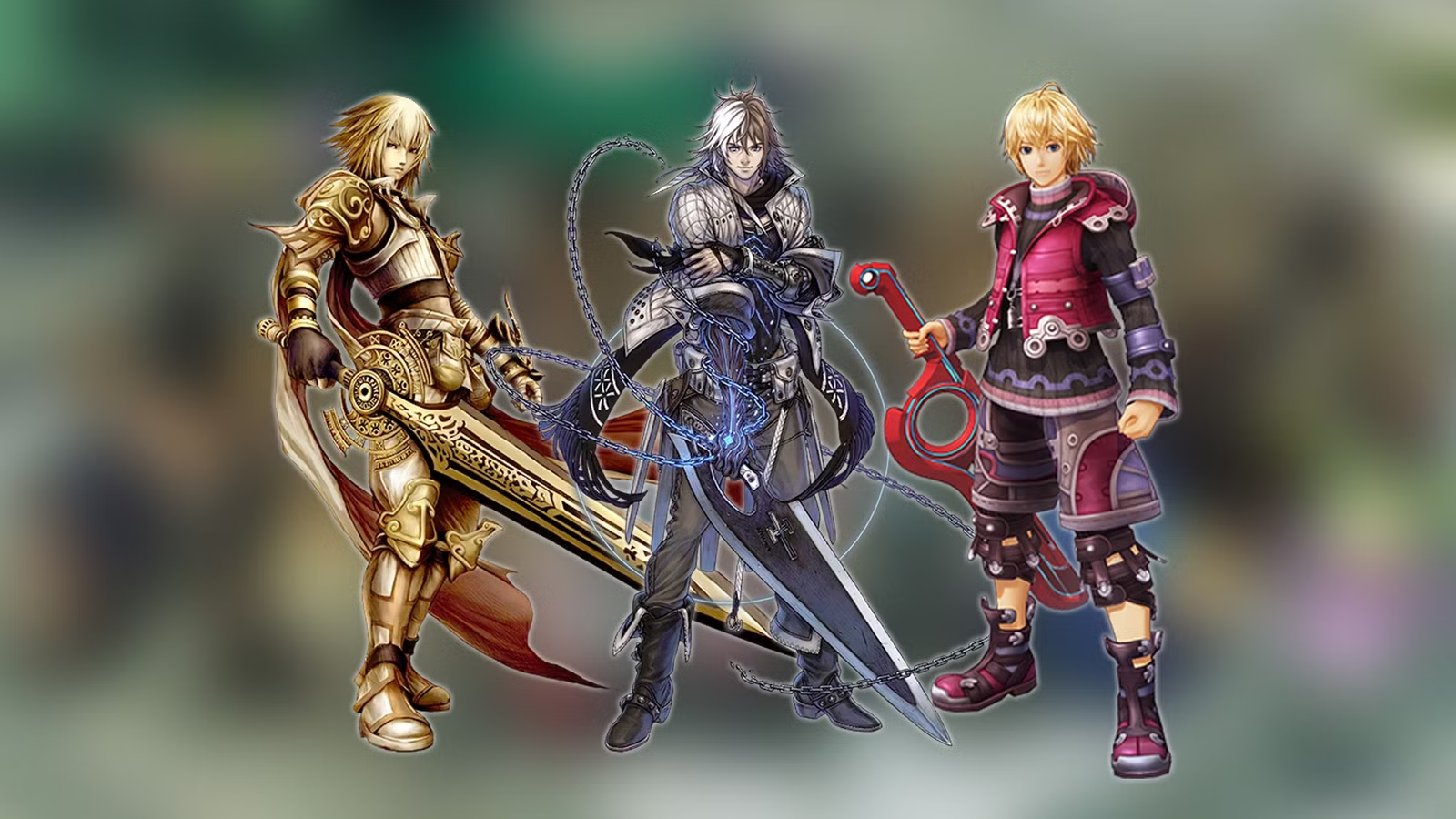
Operation Rainfall was a pivotal moment in gaming history that demonstrated just how organized JRPG fans could be. I know sometimes it feels like getting gamers to do anything in particular feels like herding cats, but Operation Rainfall was a masterclass in both organized action and motivating gamers. I’m not even joking about this one — it was a genuine grassroots fan movement that brought together a diverse set of gamers through their love of niche Japanese RPGs and a burning desire to play unreleased games.
Related
10 Most Infuriating Wii JRPGs
Even though the Wii was a novel and fun console, it was also host to some exceptionally infuriating JRPGs, many of which are hard to recommend.
What began as a simple desire to play the then-Japan-exclusive Xenoblade Chronicles turned into a wider grassroots movement that garnered official responses from Nintendo, saw fans directly pitch projects to publishers, and resulted in the localization and North American release of not one, but three games: Xenoblade Chronicles, The Last Story, and Pandora’s Tower.
10
Rainfall Understood the Importance of Branding
When People Know Who You Are, You’re Halfway There
When I’m not writing articles like this, I dabble in marketing, and let me tell you — a strong, consistent, and recognizable brand is worth more than almost anything. If you’ve already got one, you keep it close. If you don’t have one, you need to get one. Operation Rainfall was unusually successful in creating and maintaining its brand. The campaign developed a recognizable name and identity across its website, social media platforms, and physical campaign materials. Campaign materials even asked supporters to include a raindrop symbol in their letters so that Nintendo could be absolutely sure the letters resulted from the campaign. And the fans did it!
They included game-specific imagery and objects in physical mail campaigns, such as cocktail swords modelled after Xenoblade’s Shulk’s Monado. Cohesive and consistent branding made thousands of individual actions look like one singular, memorable movement. It’s easy to ignore isolated instances, but much harder to deny a visible movement with its own presence, symbols, and visibility. I’ve worked with professional organizations that have had trouble understanding this, but Rainfall absolutely smashed it.
9
Rainfall’s Strategy Deliberately Targeted Different Levels of Engagement
Something For the Hyper-Engaged and the Easily Bored
The problem with any campaign, whether it’s a local community issue, a fan campaign like Rainfall, or a national one, is that not everyone is equally invested in the process or the outcome. Some fans want to sign a petition and call it a day, whereas others want to get deep into the nitty-gritty day-to-day operations. Sometimes you just want to stick your name on a list and give yourself a pat on the back — we’ve all been there, including me.
Related
10 JRPGs That Shaped Modern Gaming More Than Players Realized
The release of some JRPGs had massive, rippling effects, both in the genre and outside it.
Rainfall’s strategy deliberately allowed all kinds of fans to engage in the way that interested them the most. Fans could sign petitions, preorder or wishlist on Amazon or other retailers, spread the word on social media, write letters, make phone calls, and send emails as they wished. There were specific campaign days that gave supporters a way to engage together simultaneously. This approach gave all kinds of fans a way to engage, and arguably made the campaign much more effective.
8
Operation Rainfall Unionized JRPG Fans
Speaking Together As One
I’ve expressed many a frustrated opinion in my time, whether to family, friends, or the entire Internet via social media. The thing is, I might as well have been talking to myself for all the good it did me. We’ve all done it. We’ve expressed all kinds of wishes and deeply held concerns at every opportunity, but they rarely go anywhere because a single voice can be lost in a noisy world. Operation Rainfall united these voices into a single chorus.
What started as a simple forum campaign coalesced into a dedicated network across multiple forums and social media networks, email and phone campaigns, and even physical mail. Rainfall gave geographically scattered fans a common framework, identity, and shared objective. This was the power of the alliance in action: centralized tactics and a common cause turned individual frustration into collective action. Even if the campaign hadn’t succeeded, that was a victory in itself.
7
Rainfall Kept Up a Relentless Momentum
Not Just a Passing Fad
Rainfall wasn’t a one-and-done online petition. It didn’t sputter out after an initial burst of energy. It separated the campaign into multiple discrete phases, and when Nintendo responded to the campaign to say there were no plans for any of the three games, the campaign soldiered on.
Even after Amazon froze the preorders on its listing, Rainfall adapted and mobilized its fans to write letters, make phone calls, and email instead. They didn’t even stop after the first success — when Nintendo announced Xenoblade Chronicles for North America, Rainfall simply switched its focus to The Last Story and Pandora’s Tower. Whenever something failed or succeeded, it wasn’t the end, but a new starting point. I probably would have called it a day after Xenoblade Chronicles got released… or long before, at one of the numerous obstacles along the way. Rainfall didn’t, though, which is a testament to its rock-solid organization and grassroots structure.
All Publicity is Good Publicity, But Great Publicity is Better
Rainfall started on the IGN forums, but it escaped the original community pretty quickly, expanding enough to generate media attention. All sorts of grassroots campaigns get an initial mention and then fade away, but Rainfall’s organizers grabbed it and ran with it.
Related
The Best JRPGs On Every Nintendo Console, Ranked
The rise, the fall, and the resurgence of JRPGs in Nintendo history.
They created a media-facing organization that issued press releases and provided contact information for journalists, keeping itself in the media’s eye as the campaign continued. Rainfall published news and campaign information, giving journalists a direct look at its activities and a constant source of information to publish stories. You’ve got to be lucky to grab that media attention in the first place, but Rainfall had the organizational chops to take it further.
5
Operation Rainfall Knew Who to Pressure
It’s All About Who You Know
Operation Rainfall wasn’t just a scattershot approach throwing absolutely everything absolutely everywhere. Fans had a singular goal: get Xenoblade Chronicles, The Last Story, and Pandora’s Tower localized and released to the North American market.
To get that done, they picked key targets. Nintendo of America was the initial target, as it was the gatekeeper. Eventually, the campaign realized Pandora’s Tower needed a different approach, so the campaign began to directly approach publishers to see who was willing to ask for American publishing rights. This was a clear strategic approach made possible only by the power of organization.
4
Rainfall Gave Fans a Seat at the Table
Together We Stand… And Shout Really Loud
At the end of the day, fans didn’t get to make any decisions about localization and release. That was left to Nintendo and the other stakeholders. But Operation Rainfall gave fans a very loud voice, and the campaign’s specific organization meant that this voice was increasingly talking about the things Nintendo and rights holders cared about.
The campaign directly approached publishers and understood that publishers and studios care about sales, risk, and market size. Although fans didn’t make the decisions, they had a metaphorical seat at the table — or were at least standing outside the door with a megaphone.
3
Operation Rainfall Adapted to Play By The Industry’s Rules
Suits Need Business Arguments
It’s not enough for publishers to simply know the demand exists. To actually produce a game, they need to understand the level of quantifiable demand, how that translates to actual purchase intentions, whether the rights are available — essentially, they need a solid, concrete business case.
Simply telling publishers that people wanted these games wasn’t enough. So Operation Rainfall actually built a pitch to tell publishers there was a product available, with a dedicated audience, and a concrete proposal behind it. Rainfall wasn’t just a particularly vocal fan campaign, but ended up being a highly organized advocacy group speaking the language preferred by publishers — and all three games ended up being among the best Nintendo published RPGs.
2
Fans Put Their Money Where Their Mouth Was
Money Talks
Petitions are a great way to gauge nebulous support. They say, “Hey, we like this game, and we’d be interested in playing it.” The problem for a business like Nintendo is that demand in that sense isn’t the same thing as actual intent to buy. Rainfall understood that, and explicitly targeted intent to buy as part of its campaign.
Its supporters in Europe were asked to buy Xenoblade Chronicles, and its August 19 campaign asked supporters to buy on the Wii Virtual Console. When Xenoblade Chronicles eventually released in the North American market, Rainfall urged its supporters to buy the game so that The Last Story and Pandora’s Tower could be released, too. Money talks, and the fans spent money, together.
1
Operation Rainfall Proved Commercial Demand Existed
The One Time Preordering Was Worth It
As fans, we love all sorts of things we don’t actually buy. I have so many games wishlisted on Steam, but I haven’t actually bought them yet. Maybe I will when they’re on sale. But game development is a business: if a game probably won’t sell, very few studios will bother to make it. That’s just how it goes. Operation Rainfall understood that. A core part of the campaign was to demonstrate clear and concrete commercial demand.
Xenoblade Chronicles had been put on Amazon under a placeholder name for preorders; the campaign targeted this preorder listing, and it steadily climbed Amazon’s rankings. This was far more interesting to publishers than a simple petition because it demonstrated actual purchase intent. Rainfall spoke the same language publishers did: demand and sales. Doing that required cooperation and organization on a truly massive scale to be noticed, and Rainfall got noticed so hard Amazon froze the listing.
Next
10 Best JRPGs of the 2000s
The new millennium was a period of major evolution for the JRPG genre.