


Standalone AI devices didn’t get off to the best of starts. Just to recap, I’m referring to the Humane AI Pin, which crashed and burned before it ever really took off, and the Rabbit R1 mini computer, which arrived a little underbaked.
Both devices were products of 2024, and when they failed to live up to the initial hype, it seemed like dedicated AI devices had hit an early dead end. But perhaps we were too quick to write them off. Two years on from their rise and demise, the AI hardware scene is booming.
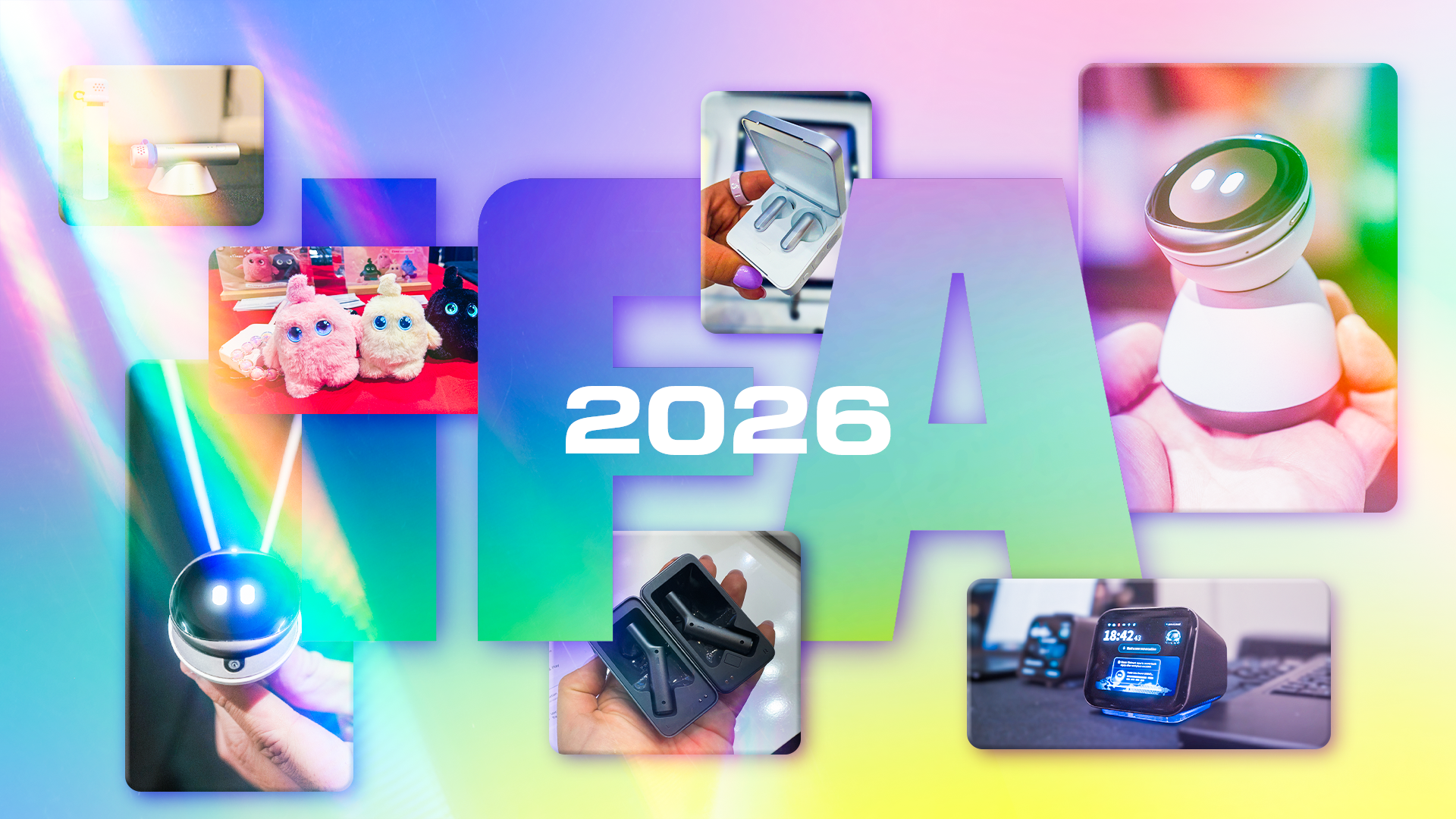
Nowhere was this more evident than last week at IFA, the consumer electronics trade show in Berlin that almost functions as a CES preview. Everywhere I looked, there seemed to be small devices built around AI. It felt like the opposite of the early LLM days, when tech companies were slapping “AI” badges on existing products with unconvincing algorithmic claims or tenuous chatbot compatibility. Instead, the products I saw at IFA usually had one specific reason for existing based on a distinct AI use case, such as note-taking, companionship, health or translation.
What makes something an AI device
One of the primary factors apparently powering the growth of AI hardware is the shift from straightforward LLMs (chatbots that can answer your questions in natural language) to AI agents (AI that’s capable of understanding context and carrying out tasks on your behalf). This means that today’s AI devices, unlike the early Humane AI Pin model, are more than just search tools that exist outside of your phone screen.
But aside from these being AI-first devices, it’s hard to define this emerging product category, other than to describe it as hardware that doesn’t neatly fit into an existing box: smartphones, smartwatches, headphones or speakers, for example. There may be elements of crossover, but you couldn’t directly compare earbuds designed for translation with a standard pair of headphones made primarily for the purpose of listening to music.
I imagine that, over time, we’ll see some of these product types coalesce and the categories become more clearly defined. At the moment, though, we’re in an AI hardware Wild West. It’s a time of playful, imaginative experimentation. People in the tech world known for pushing the boundaries of design, including former Apple designer Jony Ive and former employees from tech startup Nothing, are getting in on the action, cooking up entirely new products the world has never seen before.
Ive’s device — a collaboration with OpenAI — is rumored to be a doughnut-shaped speaker that you can carry around with you. Meanwhile, we already have pins, pendants, earbuds, bands and other accessories. Then there are robots, microphones, credit card-sized gadgets and tabletop boxes that are starting to come to fruition.
“There is not necessarily a compelling winner from these factors, but the range of options will be key for more widespread adoption as consumers will demand different ways of using them,” says Ben Hatton, connected devices analyst at CCS Insight. “Someone that doesn’t wear a lot of jewelry may want a wallet-sized card to carry, while others may prefer a device that clips onto an existing smartwatch band or onto a lapel.”
It’s also all very well having an interesting device, but if the underlying AI and software aren’t up to scratch, the product will likely crash and burn. Both AI software and hardware can be solutions to different people’s needs, says Brandon Lutz, head of marketing for Europe at note-taking AI startup Plaud. But, he adds, “hardware always is going to be a longer solution timeline than the software.” Getting the software right first is more important than coming out with a device, which may need longer to bake.
Plaud now has three different devices that plug into its AI platform — a voice recorder that’s small and slim enough to fit into your wallet, a wearable pin and newly announced headphones that can record and transcribe phone calls, as well as allow you to interact with your AI agent by speaking. This portfolio alone speaks to Hatton’s point about different people having different preferences.
Hatton also has some advice for anyone thinking of buying an AI device: “The most important question consumers should ask themselves when buying these devices is, where is my data processed and stored?” Privacy concerns are “the most significant hindrance” for AI hardware, he adds. Before you hit that purchase button, it’s worth reading those privacy policies carefully.
Dedicated AI devices at IFA 2026
At IFA, I saw a range of AI devices spanning different categories and use cases. Here are some that stood out.
The Relay Q microphone tucks into your hand or can be worn on the collar.Andrew Lanxon/CNET
The Relay Q, designed by former Nothing employees, is an AI microphone designed to capture whisper-level audio that allows you to communicate with your desktop by voice. It can transcribe your words or relay AI prompts, such as drafting and sending an email on a particular topic.
It’s activated either by holding down the top of the microphone while you speak or by a MagSafe remote on the back of your iPhone. The top also pops off to become a magnetic pin that can grab onto your collar.
The iKairos can be worn as a pendant, but it doesn’t have to be.Andrew Lanxon/CNET
iKairos is effectively a modular system with a circular AI device at its heart, about the size of a large smartwatch face. The device, called the “neural core,” can either be worn around your neck as a pendant or slotted into a cute desktop robot to form the head. It slides open to reveal a camera, but the physical shutter means this doesn’t have unfettered visual access to what’s going on around you.
The device captures context about you, your life and your environment, creating a repository of memories that can be recalled by an AI agent. It also makes suggestions that could be helpful to you in your daily life.
Plaud One earbuds are the latest note-taking device from the AI company.Katie Collins/CNET
These earbuds, the latest product from AI note-taking company Plaud, will capture and upload conversations around you, as well as phone calls, using the built-in eSIM with 4G LTE.
Plaud’s software will then provide automatic transcriptions of your meetings and can turn these into summaries, follow-ups or reports. The company’s agent allows for native integration with other tools you likely rely on, including Google, Gmail, Slack and Notion.
Violoop
Andrew Lanxon/CNET
The Violoop can plug into any computer, read your screen and run an AI agent locally, executing tasks on your behalf with permission. This is ideal for older laptops that don’t have the compute power to run on-device AI. Over time, the Violoop will learn about you, your routines and your preferences, becoming more competent in reading the context and preparing to take action on your behalf.
Switchbot’s AI MindClip and Kata Mini
Katie Collins/CNET
Switchbot’s AI MindClip is a wearable AI assistant that can capture memories and record conversations to generate reminders, timelines and summaries. It relies on Qwen, the smart assistant developed by Alibaba, while drawing on AI capabilities from ChatGPT, Gemini and other models and it’s compatible with other services you might use, such as Google and Apple calendars.
The Kata Mini is an AI companion that will soon be able to control your lights.Katie Collins/CNET
This cute Kata Mini keychain robot is more than just a Labubu with a battery. Also made by Switchbot, it’s an AI companion you can play with and also use to control the company’s smart home products. You can tell it to turn your lights on and off, for example — let’s just hope it doesn’t think it’s a game.
Timekettle W4 Plus AI Interpreter Earbuds
The W4 Plus earbuds can translate video while you’re watching it.Katie Collins/CNET
The latest version of Timekettle’s translator earbuds allows for real-time translation in face-to-face conversations, phone calls and online meetings. They’re also better than previous versions at translating videos you’re watching.
Luna Band
The Luna Band is more than just an activity tracker.Katie Collins/CNET
Yes, the Luna Band is an activity tracker, but it also has some AI features that set it apart. Its firmware quickly “tunes” into your body, meaning that in just a few days, it will be different from the Band you originally took out of the box. It also uses sensor data to make a timeline of suggestions for things you should do throughout your day — the ideal length and time for a walk, for example, or the best moment to take your magnesium before bed.
Editors’ note: Katie Collins’ travel costs for the IFA conference were covered in part by Xiaomi. The judgments and opinions of CNET are our own.
Katie Collins
See full bio