

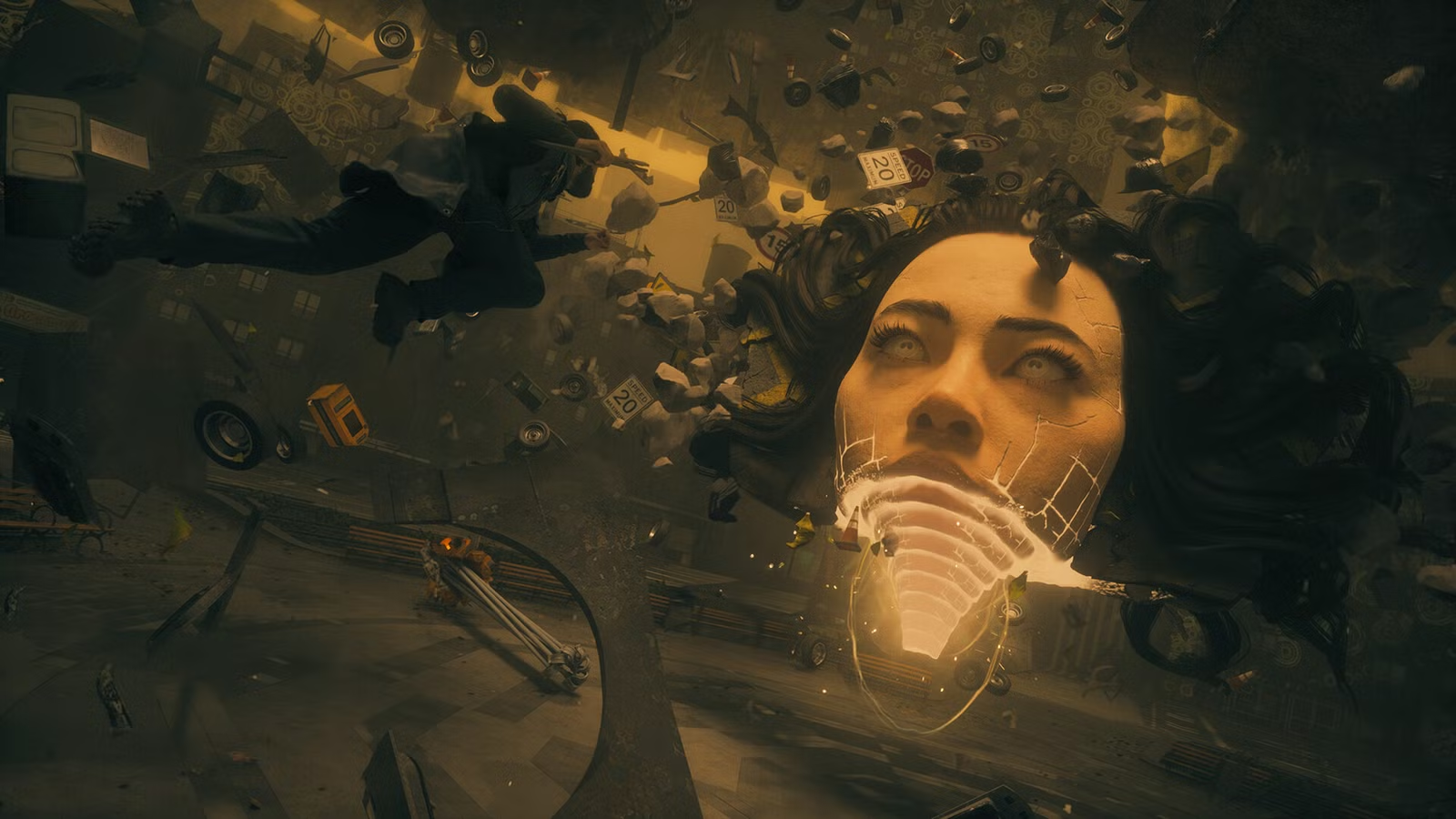
Control Resonant has many inspirations: the endless sprawl of concrete jungles, the paranormal power of the everyday, and… Japanese manga?
That’s according to the game’s art director Elmeri Raitanen and communications director Thomas Puha, who spoke to Famitsu about what powered their creativity during development of Control Resonant. While the original Control game leaned into brutalist architecture and government bureaucracy, its sequel opens into the wider world of Manhattan—thus inviting new inspirations into the mix.
Related
Interview: Control Resonant Is Twice as Large as the Original & Remedy’s Fastest Game Ever
We spoke with Art Director Elmeri Raitanen about the sequel’s highlights.
Control Resonant Draws On Japanese Cosmic Horror
Raitanen was explicit about the legendary Japanese creators who influenced his direction in Control Resonant, name-dropping four major artists who are known for their inventiveness.
He said: “I’ve been greatly influenced by Japanese pop culture. I’ve drawn a lot of inspiration from the works of people like Akira Kurosawa, Satoshi Kon, Tsutomu Nihei, and Junji Ito. Now, I would be very happy if I could give some kind of inspiration or emotion to Japanese artists through the things I create myself.”
The Kurosawa influence checks out, with Control Resonant being the most cinematic game Remedy Entertainment has created—a notion which has only strengthened throughout Remedy’s releases, including the almost TV show/game-hybrid that was Alan Wake 2. Kurosawa is one of Japan’s most famed directors who have inspired countless creatives, including Hideo Kojima, Quentin Tarantino and Sergio Leone.
“I’ve been greatly influenced by Japanese pop culture. I’ve drawn a lot of inspiration from the works of people like Akira Kurosawa, Satoshi Kon, Tsutomu Nihei, and Junji Ito.”
Satoshi Kon is best known for directing the anime horror classic Perfect Blue, which focuses on a Japanese idol stalked by an obsessive fan. The film is a highly influential study of isolation and obsession, often blurring the boundaries between reality and illusion—something which Control Resonant loves to do. In the film, it’s hard to know what is really happening and what is occurring in the idol’s mind, creating a sense of confusion and disorientation.
Tsutomu Nihei and Junji Ito are both manga artists, with Nihei best known for his debut BLAME manga, as well as Knights of Sidonia in 2009. Ito is a niche cult figure but is widely respected in horror circles for his unique art style that primarily incorporates spirals. His freakish manga series Uzumaki is regarded as one of the best and was developed into a TV series by Adult Swim in 2024.
Puha also chimed in, expressing his love for the anime series Neon Genesis Evangelion, perhaps the most famous television export from Japan. Its cyberpunk aesthetic popularized the style in the west and inspired countless projects across entertainment and media, with its impact still often referenced to this day.
Related
Interview With Mikael Kasurinen, Control Resonant’s Creative Director Discusses Influences and RPG
Mikael Kasurinen shared a few Control Resonant’s gameplay influences and how Dylan will handle his role as protagonist.
Control Resonant Wins Over Fans After 7 Long Years
Despite a 7-year gap between releases, Control Resonant has proven to be one of 2026’s biggest games, with fans more than pleased to dive back into the weird and wonderful world Remedy has created. Its refined systems of combat and its heavy emphasis on otherworldly visuals have been a huge hit with gamers.
In DualShockers’ own review on Control Resonant, Tay Garcia heaped praise onto the “visceral” and “highly satisfying” combat systems, saying the game offers a variety of builds to suit different play styles. She also complimented the “mind-bending level design and environmental mechanics” as a standout feature, saying Dylan Faden’s odyssey of strange is one of Remedy’s crowning achievements.
The game has also received lashings of acclaim from players too, with one Steam reviewer dubbing it as “the perfect blend between the movie Inception and the video game Prototype”. Now there’s a throwback.
Next
Control Resonant: 8 Best Tips and Tricks We Wish We Knew Sooner
These tips and tricks are sure to make Dylan’s adventure through Manhattan easier.