


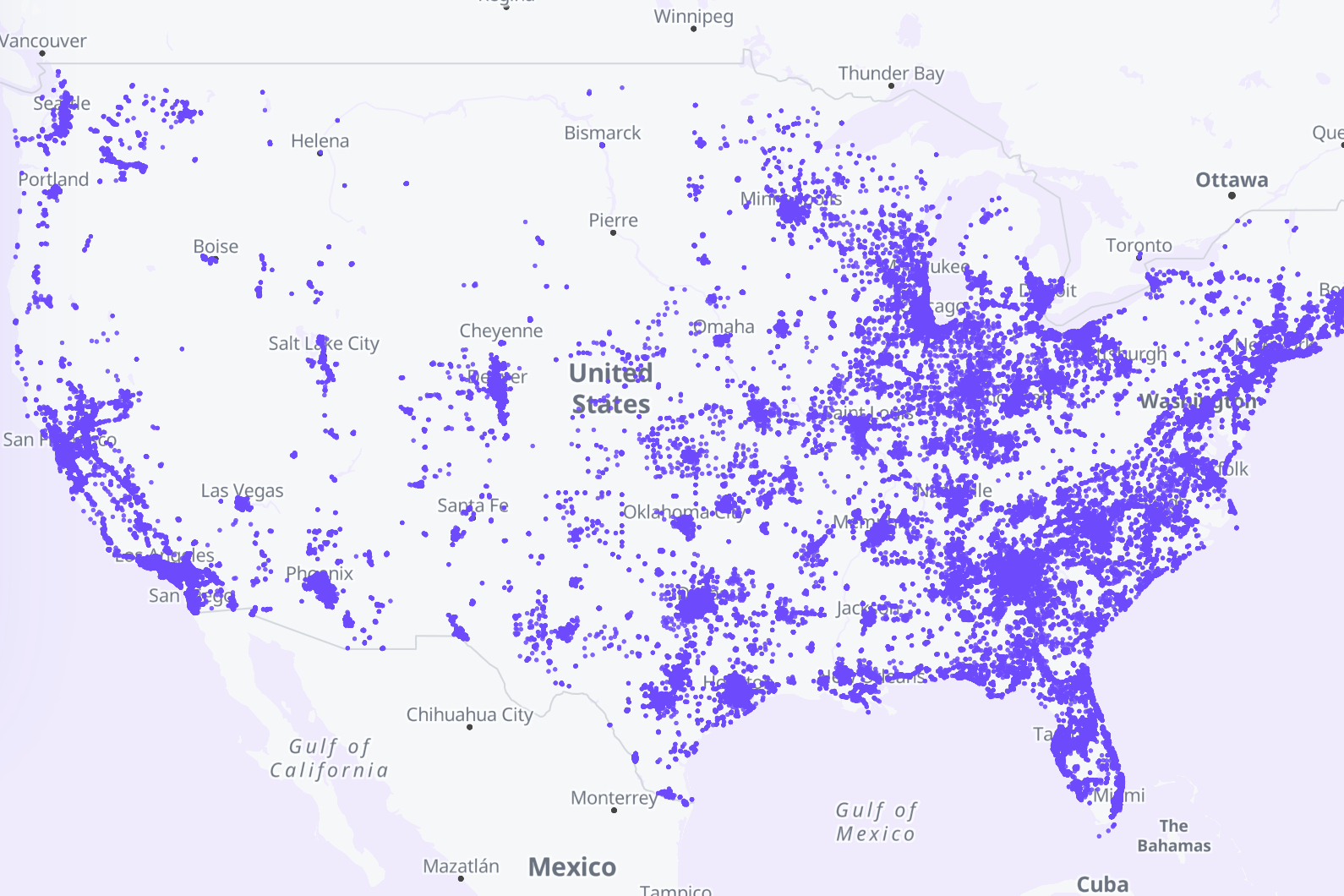
A powerful, free Flock surveillance-tracking platform is now hosted by Proton, the creator of Proton Mail and Proton VPN. The move provides extra technical and legal protection for the interactive mapping tool, which Flock has repeatedly attempted to shut down through legal threats.
The deal, announced on Wednesday, gives the public access to a free database of Flock Safety’s automated license plate readers and AI surveillance cameras across the US.
Security researcher Joshua Michael first published the interactive map in September before facing a swift trademark complaint from Flock. Despite Flock’s demands for its removal, the map remains publicly accessible.
Flock’s surveillance networks capture license plates, vehicle details, human physical characteristics, and audio signals such as gunshots or shouting. While law enforcement agencies use this data to track and search suspects, privacy advocates warn that the technology enables widespread, unchecked tracking.
Proton also says the map shows far more Flock cameras are active than Flock currently says it has. Flock said this summer that it operates more than 120,000 cameras nationwide, but the tool says there are more than 214,000 Flock devices in service, with more than 80,000 in the planning stages.
A representative from Flock Safety didn’t immediately respond to a request for comment.
The map is one of the most usable Flock tools I’ve seen. Proton’s Flock tool has better visual clarity, faster search responses and a more intuitive interface than other sites I’ve tried and is available without a subscription to other Proton services.
I searched my own city, which canceled its Flock contact over a year ago. The map accurately reported that no active Flock cameras are currently present, but correctly located decommissioned Flock cams. Since the data is based on Flock’s own reporting, I place more trust in it than in crowdsourced tools like the Deflock app, which are subject to errors or misrepresentation.
Proton’s tool is striking to look at and simple to use.Proton
“My research on FlockSurveillance.org documents cybersecurity failures with national-security consequences,” map creator Joshua Michael told CNET. “My research argued that Flock Safety could not detect exports of their data and that because they hold data on nearly every American and their pattern of life, they are a national security threat to our country and people.”
Michael said Flock has “promised to take every measure possible to take my research offline,” he said, offering that as one reason why Proton moved to preserve the map in its Swiss servers. Switzerland enforces some of the world’s strongest privacy laws. Proton’s site notes that under Swiss data protection regulations, the company isn’t required to comply with requests that are not supported by a Swiss court order. Flock is a US-based company.
Camera locations are constantly changing, meaning a surveillance map could rapidly become dated.
“If new and reliable data becomes available, then we will update the map,” a Proton spokesperson told me. “We’re committed to keeping the public informed of all forms of surveillance where reliable data can be sourced.”
Another surveillance mapping option
While Proton’s map provides a specialized, point-in-time look at Flock Safety’s network, the Atlas of Surveillance offers a broader, historical catalog of the sweeping technologies US law enforcement agencies have quietly adopted over the years.
Powered by a network of volunteers who analyze public data and official government records, the Atlas database tracks everything from automated license plate readers to cell-site simulators and body-worn cameras. The project continuously updates its findings.
Tyler Lacoma
See full bio