


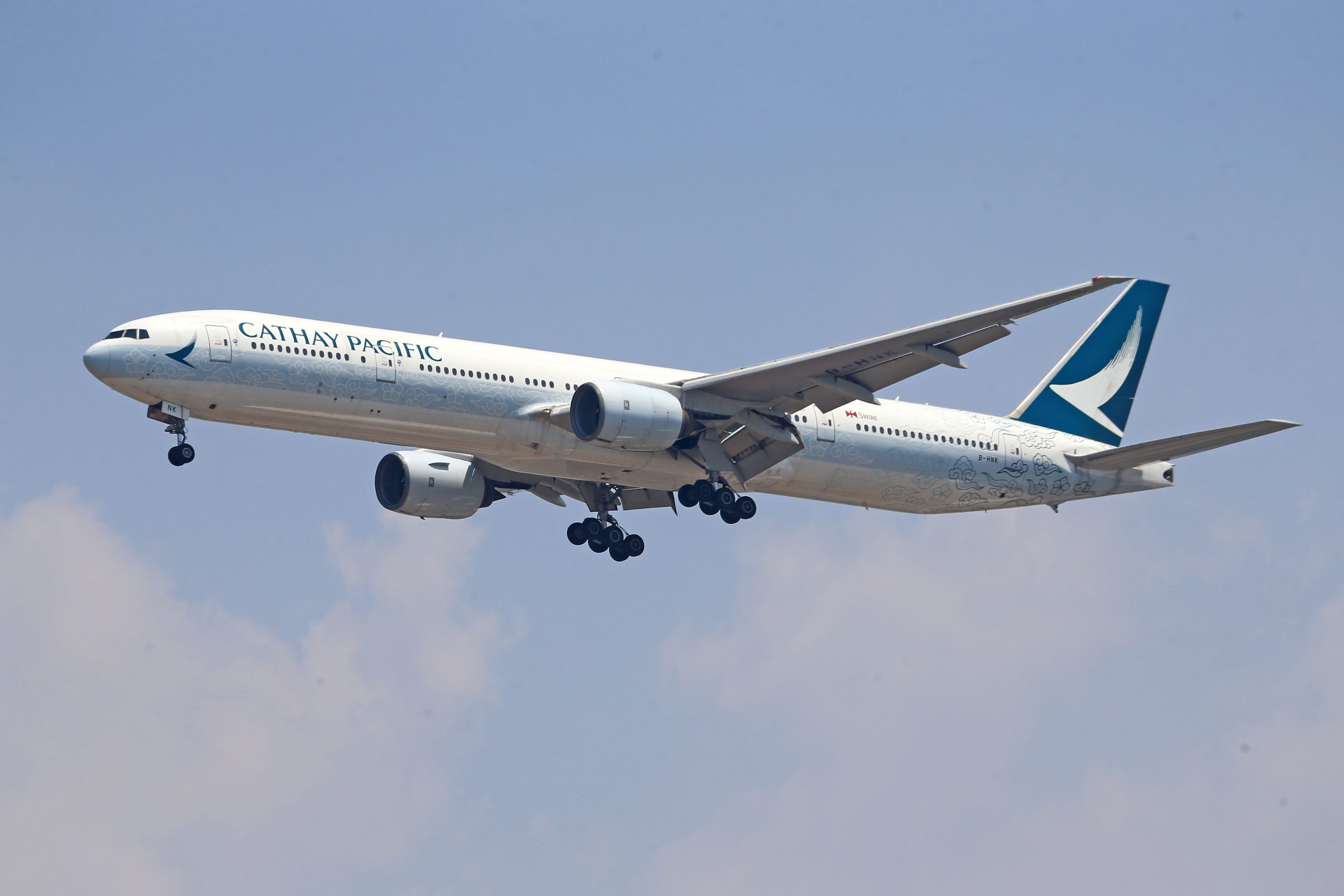
Google recently confirmed that it’s in the process of expanding its artificial intelligence-driven climate initiative to the Asia-Pacific region, partnering with Cathay Pacific to reduce the warming impact of airplane contrails. This comes not too long after the company announced its joint initiative with the UK government back in August.
Available data suggests that contrails account for roughly one-third of aviation’s total climate impact as they persist and trap heat in the atmosphere. As such, the team-up between Google and Cathay Pacific will be responsible for testing contrail-avoidance routes on ultra-long-haul flights.
The system uses predictive AI, satellite imagery, and weather intelligence to identify cold, humid atmospheric zones where warming contrails form. Dispatchers also provide flight teams with actionable data before departure, with pilots receiving live insights through in-flight Wi-Fi and Cathay Pacific’s Electronic Flight Folder to make altitude adjustments around those zones. According to Google:
We started an operational trial with more than 100 flights targeted across Cathay Pacific’s network. More than 80 flights followed contrail-avoidance routes, with Google’s satellite imagery analysis estimating that these flights reduced the warming impact of contrails by roughly 40%. The Hong Kong–Singapore corridor was among the routes tested, as flights in this airspace frequently encounter conditions conducive to persistent contrail formation. Analysis from the trial indicates that interventions on this single route account for more than 50% of the trial’s total emissions reductions.
Building on these initial results, both companies are now launching a second phase of trial flights. Google is also partnering with Contrails.org, a nonprofit initiative to further test operational feasibility across diverse operating environments and transpacific routes using existing aircraft and fuel.