


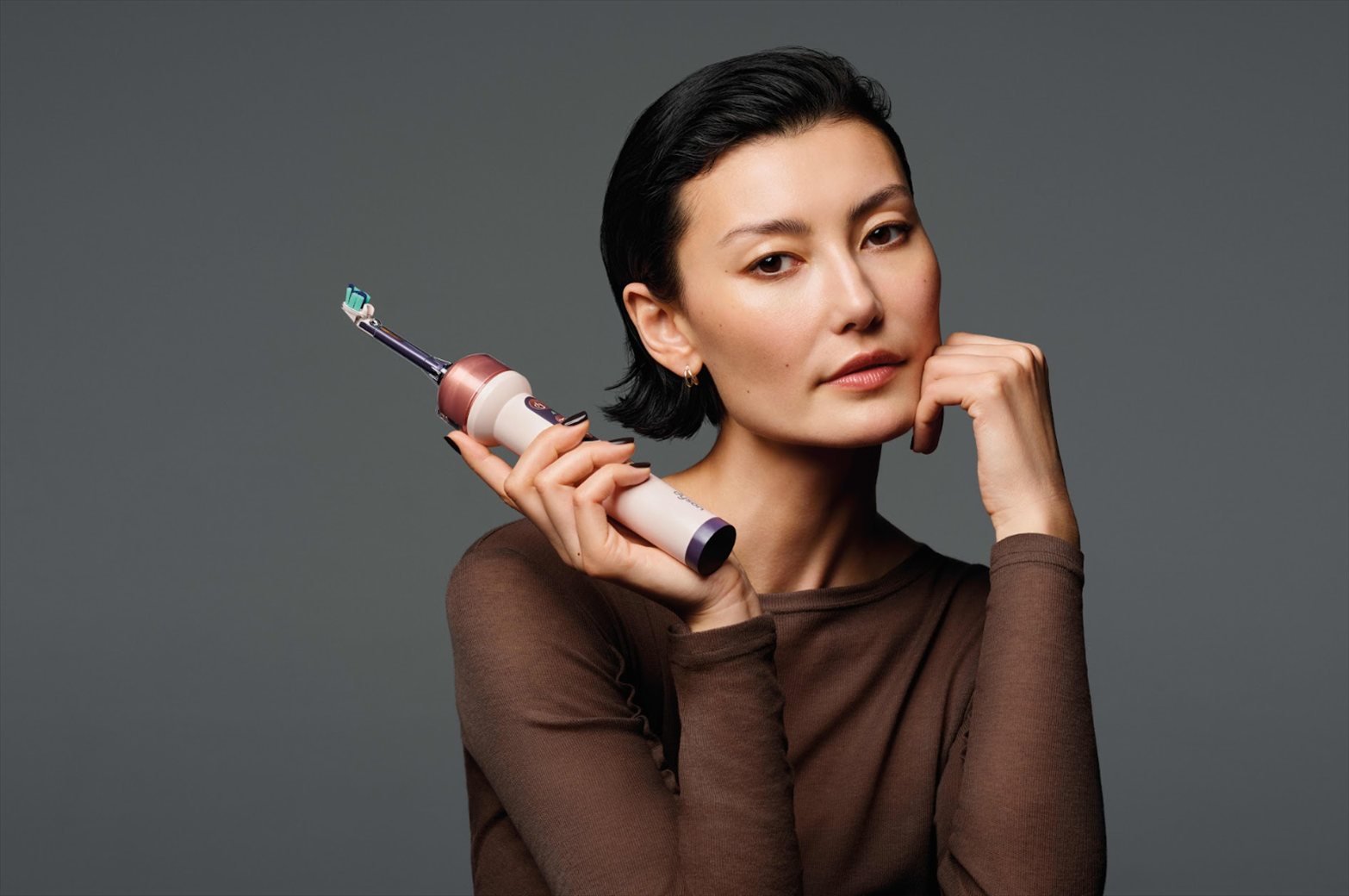
Dyson has just launched what is probably the most technically ambitious toothbrush ever made. The Dyson CameraJet has a live camera, AI-powered gap detection, and a precision liquid jet into a single device, aiming to replace the separate steps of brushing, flossing, and mouth-rinsing in one routine. For someone like me who uses electric toothbrush and a water flosser, this sounds like an awesome news. Plus, it’s Dyson we are talking about who doesn’t shy on spending their budget for advanced research and technology.
A 100k pixel macro lens camera built into the brush head scans 28 images per second to detect, track, and predict the gaps between your teeth in real time. Within 100 milliseconds of spotting a gap, the device fires a conical burst of mouthrinse directly into it. The whole system runs on 16 million lines of code and was trained on 470,000 dental images collected during development.
A traditional water flossers typically use a needle-type stream that can pierce through plaque without fully dislodging it. Dyson’s conical jet uses a wider, spreading spray pattern that sweeps plaque away more completely, and it operates at a lower pressure to be gentler on gums and enamel. Dyson worked with the National University of Singapore’s Faculty of Dentistry over five years to develop a proxy plaque material that let engineers test and iterate on jet profiles without needing a clinical trial every single time.
The mouthrinse itself is stored in a compact 12.5ml anti-gravity tank. Unlike conventional fluid systems that can draw in air and lose pressure when you tilt the brush, Dyson’s tank uses a diaphragm pump and pressure chamber to deliver consistent jets regardless of orientation. That matters most when cleaning the backs of your teeth, where the brush is nearly horizontal.
On the bristle side, Dyson’s variable sonic oscillation varies the angle of the brush head’s movement rather than holding a fixed oscillation angle. The idea is to stop bristles from stalling against teeth in hard-to-reach areas, something Dyson engineers observed in slow-motion footage of competing sonic toothbrushes. Independent testing reportedly showed up to 69% more plaque removal in hard-to-reach areas compared to market-leading premium electric toothbrushes. The dual-bristle brush head pairs slightly firmer inner bristles for surface stain removal with softer outer bristles along the gumline.
I have to say, the concept of a camera watching your teeth while you brush feels weird, but the more I read into how Gap Optical Targeting works, the more it makes sense as a solution. Most people simply do not floss (just being lazy, including myself, until I got into gum disease), and a toothbrush that does it automatically removes that friction entirely.
The CameraJet also connects via Wi-Fi (2.4GHz) and Bluetooth to the MyDyson app, where you can access live camera viewing, brushing insights, coverage mapping, and personalised feedback on your technique. Importantly, Dyson says no images are recorded or stored on the device or in the cloud; the camera is only active during live viewing or when the auto-jetting function triggers it.
Dyson has also engineered a matching toothpaste and mouthrinse to complement the system. Both are low-foaming (the toothpaste skips SLS entirely) so the camera can maintain a clear view. They come in Ginger Mint and Spearmint flavours.
The Dyson Dental System is available from 2 September 2026 at dyson.com.au, Dyson Demo Stores, and selected retailers for AU$799. That price includes the CameraJet toothbrush, charging dock, travel case, and a starter kit with both the toothpaste and mouthrinse. It comes in Ceramic Ultra Blue and Ceramic Pink.
About Michael Aulia
Owner of CravingTech.com, Michael is a tech enthusiast who blends a love for gadgets with a passion for gaming. He has been in the IT industry and reviewing consumer products for more than 20 years.
With insightful articles and professional reviews, he navigates the digital landscape, offering expertise on consumer electronics and gaming trends.
–>
Source link